Mini Split vs Space Heater: Which Makes More Sense for Your Home?
Every winter I get the same question from neighbors here in Wilmington: "Should I just grab another space heater from the hardware store, or is it finally time to put in a mini split?" I've been on both sides of this decision in my own house - running a portable electric space heater in my bonus room for two winters before I broke down and had a ductless mini split installed. The difference was night and day.
The short answer: For any room you heat regularly through winter - a home office, a bonus room over the garage, a sunroom, a converted workshop - a mini split heat pump will usually win on comfort, safety and long-term savings by a wide amount. It can deliver up to three units of heat for every unit of electricity it uses, while a space heater produces just one unit of heat for every unit of electricity it uses. If you run a 1,500-watt electric space heater 8 hours a day here in coastal NC, it can easily add $40–$75 to your monthly electric bill. With a mini split that's sized right, you can heat the same room for about half to a third of that. But if you only need heat a handful of nights per year in a guest room or want a quick warm-up under your desk, a basic space heater at $30–$150 is perfectly fine - just use it carefully.
The rest of this article walks through upfront cost, efficiency, safety, comfort and installation so you can match the right answer to your specific room, climate and budget.
What Is a Mini Split Heat Pump?
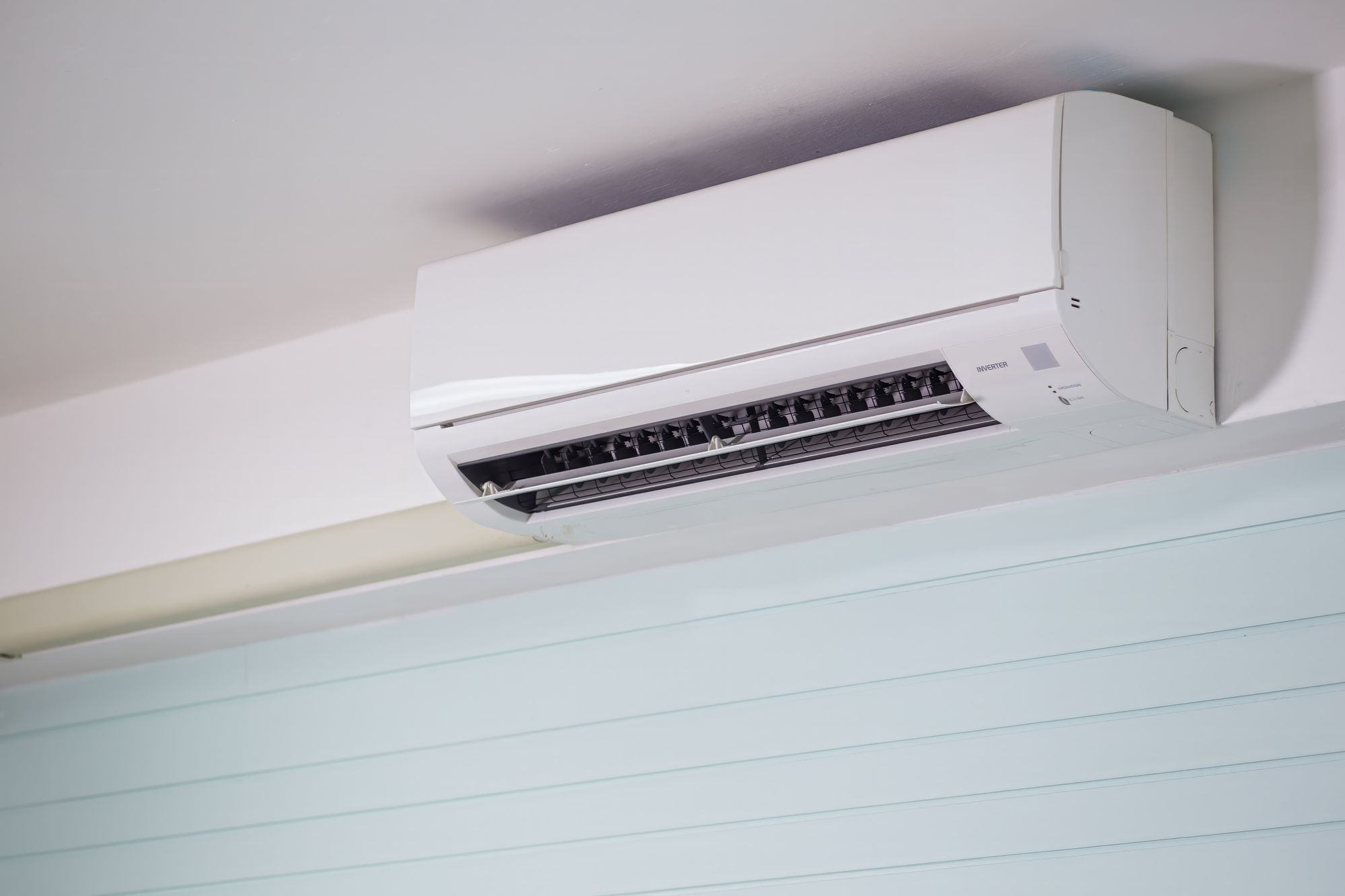
Once you take apart a ductless mini split system, it is pretty easy to see how it works. There is an outdoor condenser/compressor unit - it looks like a small air conditioner - connected by refrigerant lines to one or more indoor air handlers mounted high on your wall. You do not need any ductwork, and that is why these are so popular for additions, bonus rooms, garages and older houses that never had central air.
Most modern mini splits are heat pumps, meaning they work in heat pump mode to move heat rather than generate it with hot elements. In summer they pull heat out of your house so it can cool, and in winter they pull heat from outdoor air and push it inside. That process is what makes them so energy efficient compared to straight electric heat.
Key points worth knowing:
- High efficiency: A COP (coefficient of performance) of 3–4 means you get 3–4 units of heat for every 1 unit of electricity. Ductless mini splits have to have a minimum HSPF rating of 8.2, and many modern units are rated well above that.
- Zoned control: You can heat or cool individual rooms without having to condition the entire house.
- Quiet operation: Indoor heads often run below 30 dB - quieter than a refrigerator.
What Is a Space Heater?
When you say "space heater," you usually mean a plug-in, portable electric heater - not a furnace, not a propane wall unit, not a boiler. These come in a few types:
Nearly all portable space heaters in the U.S. max out at 1,500 watts on high, drawing about 12.5 amps from a standard 120V outlet. Space heaters are able to operate at nearly 100% efficiency at the point of use - every watt of electricity becomes heat. But that's also where they cap their efficiency at 100%, with no boost effect like heat pumps deliver.
The main draws are obvious: lower cost to buy (space heaters cost between $30 and $300 to buy), no installation, and you can carry one from room to room. Their usual role is spot heating - a home office, a drafty bedroom, under a desk or a quick morning warm-up in the bathroom. Space heaters usually struggle to heat entire rooms effectively. They are not meant for whole-house primary heat.
Mini Split vs Space Heater Quick Look
This table is based on a typical 200–400 sq ft room in a climate similar to Wilmington, NC, used daily through winter. The numbers reflect 2026 pricing and the current U.S. average residential electricity rate of about 18.3¢ per kWh.
| Factor | Mini Split Heat Pump | Portable Space Heater |
|---|---|---|
| Best for | Daily-use rooms, bonus rooms, garages, sunrooms | Occasional use, guest rooms, quick warm-ups |
| Typical upfront cost | $2,500–$5,500 installed (single-zone) | $30–$150 retail |
| Approx. operating cost per winter season | \~$50–$100 for a frequently used room | \~$150–$250 for similar use |
| Heating coverage | 200–600+ sq ft per indoor head | Effective for \~100–200 sq ft max |
| Safety risk | Low - wall-mounted, no hot surfaces, dedicated circuit | Higher - hot surfaces on floor, fire hazard, circuit overload risk |
| Noise level | Library-quiet (under 30 dB indoors) | Fan noise similar to a small box fan; oil-filled types quieter |
| Cooling capability | Yes - full air conditioning | No - electric space heaters do not offer air conditioning |
| Efficiency multiplier | COP of 2–4+ (200–400% effective efficiency) | 100% max (1:1 electricity to heat) |
Mini splits cost thousands up front but win on every day-to-day metric. Space heaters win only on purchase price and portability.
Decisive Factor 1: Upfront Cost vs Lifetime Cost
Most people look at a $60 electric heater next to a $3,500 mini split install quote and stop right there. I get it - I almost did the same thing myself. But if you're running that heater every day through winter, the math changes faster than you'd think.
- For a single-zone ductless mini split (9,000–12,000 BTU), you're usually looking at $2,000 to $5,500 installed, depending on the brand, line-set length and electrical work. If you go with premium cold-climate models or tricky installs, the cost can push toward $6,000–$8,000.
- Most of them land between $30 and $150 for a decent ceramic or oil-filled model, so space heaters can be inexpensive to buy.
Operating cost is where it gets real: If you run a 1,500 W space heater 8 hours a day for a 90-day heating season, that uses about 1,080 kWh. At 18.3¢/kWh, that's about $198 per winter for one room. With a mini split that has a COP around 3 and is delivering the same heat, it might draw only about 360 equivalent watts of input. It would consume around 259 kWh over the same period - about $47. Mini splits can cut heating costs by 50% to 73% compared to electric resistance heating.
That's about $150 saved per winter, per room. If your mini split cost $4,000 installed and you are saving $150/year in one room, simple payback is under four winters. If you were running two or three space heaters in different rooms, the payback is even faster because you are adding up savings against multiple inefficient units.
Decisive Factor 2: Efficiency and Performance
A space heater turns electricity into heat at a 1:1 ratio. One watt in, one watt of heat out. Space heaters usually have an HSPF rating around 3.4 to 3.6. That sounds fine until you learn that a mini split does not just convert electricity to heat - it moves heat from outside air into your room. Ductless mini splits can deliver up to three units of heat per electricity unit, and high-efficiency models push that to four or more. Mini-splits use less electricity than space heaters to deliver the same warmth.
In real-world terms, at the U.S. average rate of about 18.44¢/kWh, a space heater costs about $0.54 to deliver 10,000 BTU. What does a mini split cost for the same heat? A minimum ENERGY STAR mini split with an HSPF2 around 8.5 delivers that same heat for about $0.22. High-efficiency models with an HSPF2 near 12 can push that down to $0.15 or less. That's better efficiency by a factor of 2.5 to 3.5.
- Mini splits circulate warm air evenly across the entire room. The compressors in these units have variable speeds, so they are able to adjust their output to match the load, and the temperature stays steady without sudden surges of hot or cold air. Ductless mini splits maintain a steady temperature without sudden surges.
- Space heaters create hot spots and cold drafts in rooms. You're warm if you are sitting right in front of one, but the corners stay cold. Space heaters create uneven temperature swings in rooms because of constant on-off cycling as their built-in thermostat overshoots.
Climate matters too: In mild climates like coastal NC, where temperatures drop below freezing only occasionally, mini splits rarely hit their low-temperature performance limits. Field studies in climate zones 4–6 show winter COPs of 3–4 at moderate temps (~45°F), dropping to 2–2.5 at 0–10°F. Mini-split systems are capable of operating in sub-zero temperatures with specialized models - mini splits can operate efficiently in temperatures as low as −13°F. Some cold-climate units handle extreme cold down to −20°F or lower. A space heater's efficiency does not change with outdoor temp, but its high cost per BTU does not either.
Decisive Factor 3: Safety and Code Considerations
From a DIY homeowner standpoint, safety is where space heaters worry me most - especially around kids, pets and in older houses with borderline wiring. Space heaters are a leading cause of home heating fires. That's not a scare tactic. It is a documented fact. Space heaters present fire hazards, and older space heaters can fall over and cause fires.
- Fire hazards from placing heaters too close to curtains, bedding or cardboard in a workshop. Space heaters can become fire hazards if not monitored.
- Extension cord misuse: most heaters need a heavy-gauge cord if you can't reach the outlet directly, and lightweight extension cords overheat. Running cords under rugs is a classic house fire setup.
- Circuit overload: a single 1,500 W heater draws about 12.5 amps. On a 15-amp circuit, that is nearly the entire continuous-load capacity. Share that circuit with a hair dryer or vacuum and you're tripping breakers or, worse, overheating wiring. Space heaters can increase monthly energy bills by $40–$75 when used 8 hours daily, which tempts people to run them on circuits already carrying other loads.
Mini split safety profile:
- Mini splits are mounted high on the wall for safety, out of reach of kids and pets. Mini splits do not get hot to the touch. That reduces burn risks.
- Here in North Carolina, local electrical code looks for fixed HVAC loads like mini splits to be on dedicated circuits, which greatly reduces overload and fire risk compared with plugging multiple 1,500 W heaters into general-purpose circuits.
Winner: Mini split - much lower fire and burn risk when properly installed.
Decisive Factor 4: Comfort, Noise and Air Quality
- Fan-forced ceramic models sound like a small box fan running constantly. Oil-filled radiator types are quieter, but they take 15–20 minutes to really warm a room.
Decisive Factor 5: Installation, DIY Potential and Flexibility
- While some of you buy "DIY mini split kits" with pre-charged line sets, I'd personally recommend at least hiring a pro for the refrigerant work and the electrical tie-in. Improper refrigerant charging hurts efficiency, and bad electrical work can void your warranty - or worse.
- In North Carolina, running the circuit and making final HVAC connections typically requires licensed electrical and HVAC trades and a permit. I always tell readers to check with their local building department before starting. Permits and inspections exist for a reason - they catch the mistakes that cause problems years down the road.
The trade-off: a mini split offers a permanent, code-compliant solution that increases home value and delivers dramatically lower cost per BTU - but it usually needs pros and a permit.
Mini Split vs Space Heater: Which Should You Choose?
- You have a 200–600 sq ft room (bonus room, FROG, sunroom, garage shop) that you use most days in winter.
- Your electric bill spikes every winter from running multiple space heaters or electric baseboards - that's money going out the window in an inefficient way.
- You'll want both heating and cooling without adding ductwork or dealing with window units.
- You own your house and plan to stay at least 3–5 years, so you'll actually see the payback.
- You're replacing a propane or natural gas wall heater in a space where you also want summer cooling.
- You only need heat occasionally - a guest room a few nights a winter, a workshop you rarely use, a quick morning warm-up in the bathroom.
- You are renting or can't modify the building to mount an outdoor unit or run new electrical circuits.
- Your budget right now will only stretch to a $50–$100 fix for now, not a multi-thousand-dollar install.
- You need a temporary solution while you are saving up for a permanent one.
FAQs About Mini Splits vs Space Heaters
Will a mini split really save me money compared to a space heater?
Yes, if you are using heat regularly. Here's a quick worked example: running a 1,500 W space heater 8 hours/day for 90 winter days uses about 1,080 kWh - about $198 at 18.3¢/kWh. A mini split with a COP of 3 delivering the same heat uses about 259 kWh, costing about $47. That's about $150 saved per season for one room. Mini splits can deliver up to three units of heat per electricity unit, so the savings are real and they compound over years. But if you only run a heater 5–10 nights per winter, the savings won't justify the install cost.
Multiple space heaters on one circuit?
Almost certainly not. A single 1,500 W heater draws about 12.5 amps. A standard 15-amp household circuit has a continuous-load limit of about 12 amps (80% of the breaker rating). That means one heater nearly maxes out the circuit by itself. Adding a second heater - or even running a vacuum or hair dryer on that same circuit - risks tripping the breaker or overheating the wiring. Keep one heater per circuit, and if your house doesn't have enough circuits for that, it is time to call an electrician.
Need central heat with a mini split?
In mild climates like coastal NC, a properly sized mini split can handle most or all of the heating load for its zone. You can keep your central system or furnace as backup for the rest of the house. Think of mini splits as zoned systems - they are ideal for the over-the-garage room, the addition or the problem area that the central system can't reach well, even if the rest of the house stays on a heat pump or furnace.
Mini split for garage or bonus room?
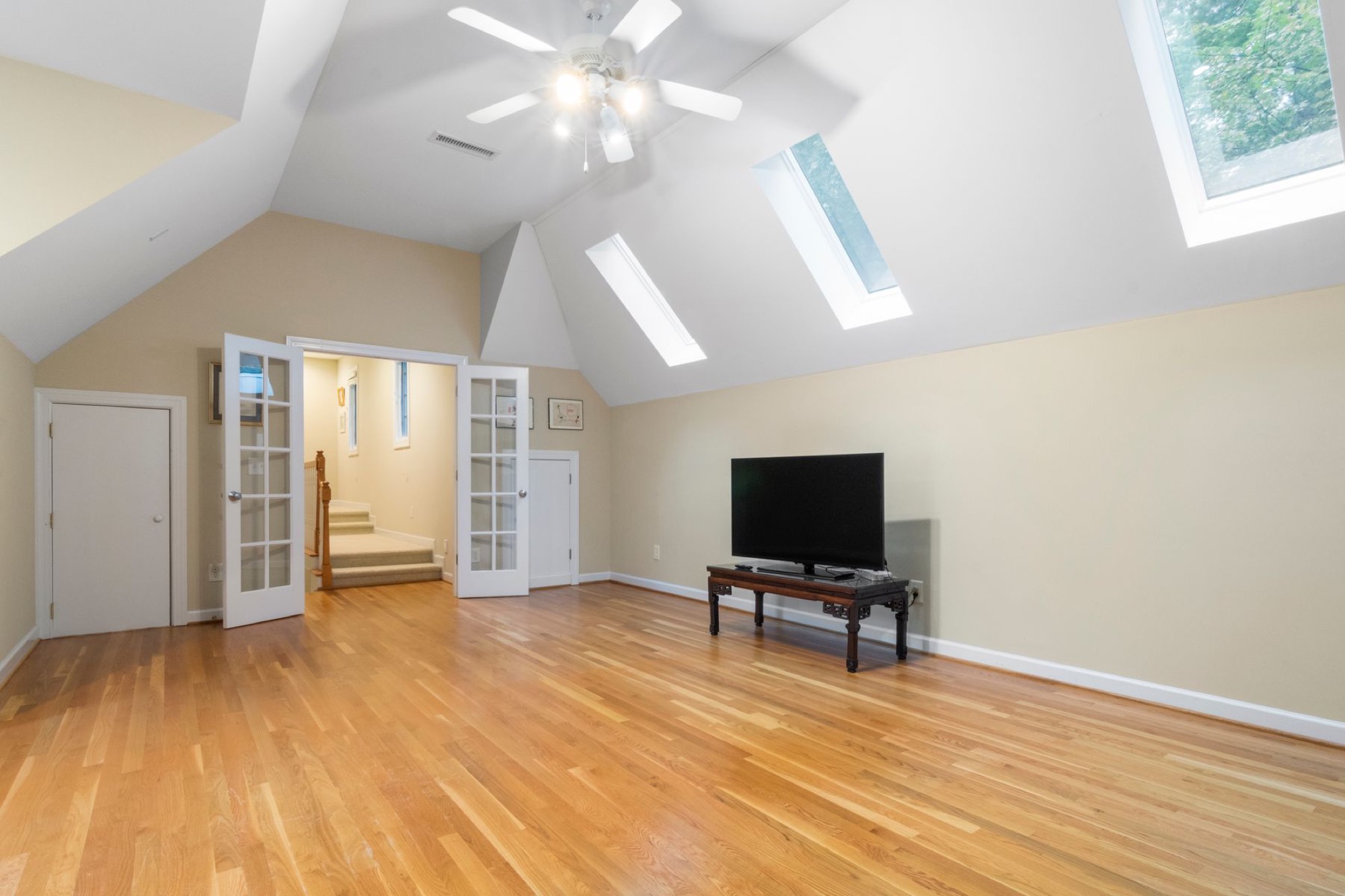
Absolutely - these are some of the best use cases. Duct runs to these spaces are tough or impossible, and space heaters often struggle to keep up or create unsafe conditions near flammable materials like sawdust, solvents or paint. A mini split mounted high on the wall keeps the floor clear and the air temperature even. From my own projects, though, insulation and air sealing matter enormously. If your garage or bonus room has uninsulated walls or a leaky door, even the best mini split will operate inefficiently. Weatherstrip the doors, insulate the walls and ceiling, and seal the gaps before you install the unit.
Can I install a mini split myself?
Some homeowners handle the indoor mounting, bracket and line-set routing themselves. I respect the ambition. But refrigerant handling and electrical work are best left to licensed pros. In North Carolina, pulling a permit and tying into the electrical panel requires a licensed electrician, and the HVAC connection typically needs a licensed HVAC tech. DIY mistakes - like an improperly evacuated line set or an undersized wire run - can kill the system's efficiency or void the manufacturer's warranty. Save money on the prep work if you want, but hire the right people for the critical steps.
When is a space heater better?
Yes, but the cases are narrow: rooms you use rarely (a few nights per winter), very small spaces like a bathroom or reading nook, if you rent and can't install permanent equipment, or buildings that simply can't accept an outdoor unit due to HOA rules or structural limits. If you go the space heater route, choose a model with tip-over protection, an overheat shutoff and a UL listing. Keep it on the floor (never on a table or shelf), away from anything flammable, and on its own dedicated circuit. And never leave it running unattended while you sleep or leave the house.