How To Heat and Cool a Shed (Without Wasting Money)
If you've ever walked into your shed in July and felt like you opened an oven door, or tried to do a project out there in January with numb fingers, you probably already know the problem: you might need to figure out how to heat and cool a shed without blowing the budget or creating a fire risk. I'm Ken, and here in Wilmington, North Carolina, I've spent years figuring out what I think might actually work. Here's what I think actually works.
What You Need to Know
- You should decide how you use the shed first - storage, workshop, office or man cave - because that choice drives every heating and cooling decision.
- Seal air leaks and add insulation before you buy any equipment. It's the cheapest upgrade you can make, especially in a warm-humid climate zone like 3A.
- A ductless mini split heat pump is generally the best option for sheds used every week or year-round - one system handles both heating and cooling.
- Portable systems like fan heaters or a window AC unit work for occasional use, but they need proper wiring - never rely on extension cords that are too small for the load.
- If you're not comfortable sizing or wiring a system, hire an HVAC pro and a licensed electrician. A shed fire isn't worth the boasting rights.
How To Decide If Your Shed Really Needs Heating and Cooling
You probably treat climate control very differently for a garden storage shed than you do for a space you plan to work in every day. The question isn't whether you want comfort - it is how much heat or cooling the shed actually needs based on how you use it.
- Storage only (monthly visits): Ventilation and maybe a vapor barrier. Freezing fluids like paint and pesticides are the main risk in cold weather.
- Hobby or craft space: Humidity control matters. Condensation ruins electronics, and mold grows fast in closed sheds that have no vents. Relative humidity should be kept below 60% to prevent mold and rust.
- Workshop: You need the temperature inside to stay workable - both for you and for wood glues or finishes.
- Full-time office or man cave: You're committed to comfort all year. That means a real HVAC system, not a box fan and hope.
New Hanover County sits in climate zone 3A, which the NC energy code puts in the warm-humid category. Cooling and dehumidification are usually more important here than deep-winter heating. Plan accordingly.
Make the Shell Efficient First
Proper insulation is what dramatically reduces the load on heating and cooling systems. Without insulation, any HVAC system is wasting energy as it attempts to maintain comfort. Do this work before you buy a single piece of equipment - proper installation sequence enhances the effectiveness of everything that follows.
Air sealing comes first. Sealing gaps and controlling moisture are critical steps to take before you install insulation:
- Caulking and weatherstripping can stop drafts that get in around windows and doors
- Foam around cable and hose penetrations
- A vapor barrier prevents condensation and mold by stopping warm air from escaping through the floor
Insulation basics - I use the lowest R-values that NC code lets as my standard, even in a shed: R-15 or R-13+2.5 for walls, R-38 ceiling. Heat is rising and escaping quickly through the roof, so ceiling insulation is crucial. Insulating walls and roofs helps keep temperatures steady. Reflective foil barriers can reduce heat absorption under the roof in hot climates, and insulation blocks the sun's rays while preventing heat and cooling loss. For thin wall cavities, rigid foam is what works. For open stud bays, faced fiberglass batts are the move. Replacing single-pane windows with double-pane models also makes the building more energy efficient.
Ventilation for moisture and summer heat:
- Add soffit vents low and vents at the gable ends or the highest point of the roof so that hot air can escape. Roof vents let hot air escape from sheds in an effective way.
- This creates simple "low intake, high exhaust" airflow that lines up with prevailing winds.
- Ventilation is essential to prevent mold and excessive humidity, but in warm-humid zones, balance it with dehumidification so you do not invite more sticky air than you can handle.
Exterior heat gain control: Light-colored or reflective roofing, shade from trees or a simple shade sail over the wall that gets the most sun can dramatically reduce how hot the shed gets before your cooling system even turns on.
Cooling Options for Sheds
Here's the spectrum from cheap-and-cheerful to serious cooling:
| Option | Best For | Limitation |
|---|---|---|
| Box/oscillating fan | Occasional use, small spaces | Doesn't lower temperature, just moves air |
| Ceiling fan | Insulated shed with height | Ceiling fans improve air circulation but don't cool |
| Portable AC | Renters, temporary setups | Portable AC units have lower cooling capacity than ductless systems |
| Window AC unit | Budget fixed cooling | Window AC units are the cheapest air conditioning solution, but noisy |
| Ductless AC | Daily/year-round use | Higher upfront cost |
Adding windows enhances airflow and reduces shed temperature. Cross-ventilation systems maximize natural air flow in sheds - but fans alone won't save you in a Carolina summer.
Portable air conditioning units come in designs that have a single hose or a dual hose. Dual-hose performs better because it doesn't pull cooler air out of the space. Either way, you need a proper vent kit - not a cracked door.
Mist cooling systems can lower temperatures in open sheds or patio-style setups, but they'll rust tools and damage stored items in enclosed structures. Evaporative coolers only make sense in dry climates, not in warm-humid coastal areas where the wet-bulb depression is too small.
Once you're putting 10–20 hours a week in that shed, it's time for a real cooling system. Ductless mini-split systems are efficient for larger or insulated sheds, and ductless systems are more energy-efficient than ducted options.
Heating Options for Sheds
Many shed fires start from careless heating system choices. The CPSC reports about 1,600 fires per year from portable heaters. Here's how to keep your shed warm without burning it down.
- Electric space heaters: A space heater is effective but not for long-term use. Space heaters are not safe for extended use in wooden sheds. Electric heaters can be used overnight but may not distribute heat evenly - keep 3 feet of clearance from combustibles, use UL-listed units with tip-over shutoff.
- Oil-filled radiators: Oil-filled radiators provide steady heat and are safe for enclosed spaces - a great option for a quiet workshop session.
- Fan heaters: Quick, directional heat ideal for short work sessions. The advantage is speed. The challenge is noise and faster heat loss once turned off.
- Underfloor heating: It is best planned during construction with a slab or new flooring. Electric mats or hydronic loops create even heat across the floor - comfortable in a workshop or office.
- Combustion heaters: Unvented propane or kerosene in small spaces is risky - carbon monoxide, moisture buildup, open flame. Wood stoves efficiently heat large spaces but need maintenance, a proper chimney, floor protection and clearances. That's generally a "call a pro" project.
Energy-efficient heating options include electric baseboard heaters and mini split heat pumps. For you, electric or heat pump solutions are simpler and safer for a backyard shed than fuel-burning appliances.
Why Ductless Mini Split Heat Pumps Are Often the Best Shed Solution
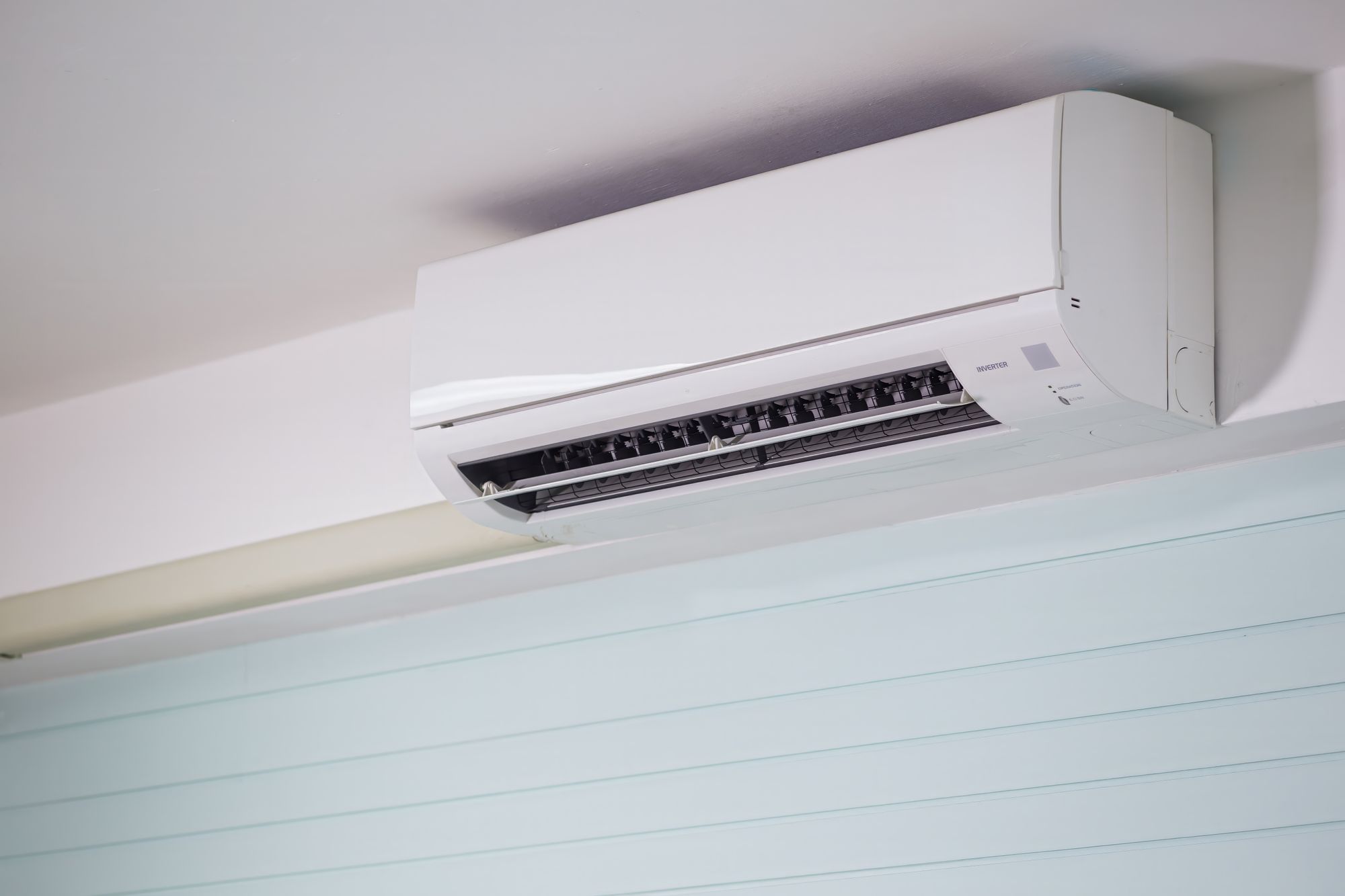
A ductless mini split is a compact heat pump: one outdoor unit, one wall-mounted indoor unit, no ductwork needed. Ductless mini-splits are energy-efficient for small spaces and can both heat and cool a shed from a single system.
Sizing: A 12,000 BTU mini split can effectively heat or cool a 10x20 shed when it has proper insulation. For smaller sheds (10x12), 6,000–9,000 BTU is usually enough. Load depends on insulation level, number of windows, sun exposure and internal heat from tools or computers. Properly sized heating and cooling systems are important based on the shed's use - oversizing causes short cycling and poor dehumidification.
Efficiency: Heat pumps deliver 2–3.5 watts of heat per watt of electricity consumed, saving 50–70% compared to resistive space heaters. Over a few years, the operating cost savings can be big - you save money every month you use it. Ductless HVAC systems are ideal for small spaces like sheds.
Comfort: Ductless mini split indoor heads are very quiet compared with a window AC unit or fan heaters - ideal if the space is an office, music room or recording setup. Ductless systems prevent air leakage and improve indoor air quality since there's no ductwork to leak or collect dust.
Installation: You'll mount the indoor unit, run the lineset and condensate line through the wall, and set the outdoor unit on a small concrete pad. Refrigerant and electrical work are usually pro-only to maintain warranty. Total cost for a basic ductless heating and cooling system in a 10x20 shed runs about $1,500–$2,500 installed - competitive with buying separate high-end portable units.
Powering Your Shed Comfort
I've seen too many sketchy orange extension cords half-buried in grass feeding a space heater. Don't do this.
Permanent electrical feed is the best option: a buried UF cable or conduit run from your house's main panel to a subpanel or dedicated circuit in the shed. This gives you enough power for a mini split system, lights and tools with proper grounding and breakers.
Extension cords are acceptable short-term for low-watt loads, but never run a heating system or ductless units off cheap cords. Voltage drop is what causes overheating and fire risk.
- A 1,500 W resistive heater draws about 12.5 amps on a 120V circuit
- A small air conditioning unit draws a similar amount of current
- Sharing that circuit with power tools is asking for tripped breakers or worse
Use GFCI protection, correct grounding and properly rated wire. If you're not familiar with reading the electrical code, hire a licensed electrician - permits are typically required for new circuits to a detached structure.
Upgrades to Make a Shed Feel Like a Real Room
Once heating and cooling are handled, a few finishing touches create a space that feels like an extension of your house:
- Humidity control: A small dehumidifier supports your cooling system in summer. A vapor barrier under the shed cuts ground moisture - especially important in termite-prone regions like NC, where termite protection is needed under Section R318.
- Interior finishes: Cover bare insulation with drywall or plywood for fire protection. Light-colored wall and ceiling paint reduces cooling load.
- Smart controls: Wi-Fi thermostats or smart plugs let you pre-condition the shed before you walk out. Remote monitoring protects sensitive stored items from temperature swings.
- Pest protection: Seal gaps and install metal mesh on vents. A warm, insulated shed is attractive to rodents - temperature alone won't keep mice out. They need physical barriers.
FAQ
What size mini split for a 10×12 shed?
A well-insulated 10×12 shed in a warm-humid zone generally does fine with a 6,000–9,000 BTU ductless mini split. Metal buildings or sheds with poor insulation and lots of sun exposure may need 9,000 BTU or more. You can use an online heat-load calculator or ask a local HVAC contractor to factor in your climate zone and where your windows are placed.
Can I safely heat my shed with a space heater overnight?
I'd advise against running typical plug-in space heaters unattended in a wooden shed. If you need "set-and-forget" heat in winter, a permanently installed ductless systems heat pump, hardwired panel heater with thermostat, or underfloor heating with proper controls is a safer plan.
Is it worth insulating an old metal shed if I only use it in summer?
Absolutely. Even a thin layer of foam board or reflective insulation can dramatically cut solar heat gain - uninsulated metal sheds can reach 30–40°F above ambient in direct sun. Insulate the roof and the wall that gets the most sun first. It's a manageable DIY project that makes any fan or cooling system far more effective.
Do I need a permit to install a mini split or run power to my shed?
Most jurisdictions require permits for new electrical circuits and permanent HVAC installation, even in a detached shed. Check with your local building department. Having the electrician or HVAC contractor pull permits as part of the job is usually the easiest path.
Can I cool my shed just with ventilation and no air conditioning?
Ridge vents, gable vents and good cross-ventilation can keep a simple storage shed from becoming an oven - especially with shade and a light-colored roof. But what about a working or office shed in hot, humid summers? Ventilation alone usually is not enough. Adding at least a fan plus some form of active cooling system is the way to maintain real comfort.