How Much Does It Cost to Cool a Garage? (2026 Real Numbers)
How much does it cost to cool a garage? I'm Ken, and I work out of my garage in Wilmington, NC almost every weekend. Down here, the garage can get bad in the summer, with triple-digit heat indexes and humidity that fogs your safety glasses. Before you start hanging cooling equipment or running wire, you might want to get real numbers. This article breaks down exactly how much does it cost to cool a garage in 2026, from the cheapest fixes to a full ductless mini split install.
Key Takeaways
- Passive fixes like sealing the places where air leaks in and adding a garage door insulation kit cost about $30–$700 and should always come first.
How I'd Answer the "How Much?" Question
Every time a neighbor asks me what it costs to cool a garage, they want one number. There is not one, but I can get close. Here's the realistic breakdown for 2026:
| Cooling Method | Upfront Cost | Monthly Operating Cost (Summer) |
|---|---|---|
| DIY passive upgrades (insulation, sealing, fans) | $30–$700 | $0–$15 (fans only) |
| Portable AC (8,000–14,000 BTU) | $300–$1,200 | $45–$100 |
| Window unit (8,000–12,000 BTU) | $250–$800 | $40–$85 |
| Ductless mini split, 1-car garage | $3,200–$5,200 installed | $55–$85 |
| Ductless mini split, 2-car garage | $4,500–$7,500+ installed | $90–$150 |
Operating costs assume 6–8 hours/day at roughly $0.18/kWh, which is close to current East Coast residential rates per the EIA's 2026 projections.
The final price can depend on your garage size, insulation, electrical requirements and how many hours you run the system. For a frequently used workshop or gym, the garage mini split will cost more up front but can make the most financial sense over 5–10 years because of its energy efficiency and dehumidification ability.
Why Garages Cost So Much to Cool
Most garages are not built for comfort. They are built so you can park a car and store stuff. That is why the air in the garage can run 20–30°F hotter than the air outside on a sunny afternoon.
- Building codes generally do not allow connecting a garage into the home's return ductwork. You can't just "add one vent" to your central system because it's a code and safety issue, since exhaust fumes could get pulled into your house.
Step 1: Cheap Upgrades That Lower Cooling Cost
Before you buy any air conditioner, you can cut your total cost by reducing the heat load with simple DIY projects. Improving insulation and sealing air leaks can reduce the size of the cooling system you need, sometimes enough to drop from an 18,000 BTU unit to a smaller one.
Here's the order I'd tackle it:
Good - Seal air leaks and weatherstripping ($30–$100) Replacing worn-out weatherstripping around the garage door can prevent hot air from getting in. Seal outlets, pipe penetrations and sill plates with caulk and expanding foam. Air sealing alone can reduce heating and cooling costs by about 15%.
Better - Add garage door insulation ($50–$200) A garage door insulation kit with foam board or reflective panels is a weekend project. Insulating the garage door can raise its R-value from nearly nothing to R-4 through R-9, which reduces heat gain a lot through the biggest surface in the room. DIY kits for single and double doors usually run $50–$200 in materials.
Best - Insulate walls and ceiling ($400–$1,500 DIY materials) Fiberglass batts in open stud bays are simple if the walls aren't finished. Blown-in or spray foam costs more but will tighten the envelope further. A well-insulated garage may need a smaller AC unit, sometimes dropping BTU needs by 25–40%.
A few other things worth saying: exhaust fans pull hot air out and draw cooler air in, which helps when you're generating fumes or heat. Box fans and high-velocity floor fans ($30–$200 each) create a wind-chill effect, but fans improve air circulation, they do not lower temperature below outdoor levels. They are comfort tools, not cooling tools.
Knowing Your Garage Size and Cooling Load
- 1-car garage: About 200–300 square feet (a typical size is 12×20 or 14×22).
- 2-car car garage: Around 400–600 square feet (20×20 to 24×24).
- 3-car garage: 700–900+ square feet.
Cooling capacity is usually measured in British thermal units (BTUs) per hour. Garages need 25–40 BTUs per square foot for effective cooling, compared to about 20 BTU per square foot for well-insulated rooms inside the house. The correct cooling capacity depends on the size of the garage, how well it is insulated and what the outdoor conditions are like.
There are factors that can push you toward the high end of that range:
- High ceiling height (ceilings of 10 ft or more hold more hot air)
Example calculation: A 2-car garage with 400 square feet at 25 BTU per square foot needs 10,000 BTU. That same garage uninsulated in extreme heat at 40 BTU per square foot needs 16,000 BTU. That is the difference between a $2,800 system and a $5,000+ system, all because of garage insulation.
Garage Cooling Options and Their Typical Costs
Window units - $250–$800 A window unit is efficient for the price if your garage has a suitable window. If not, you can frame in a wall sleeve. Security can be a concern if the unit sits at ground level. Window air conditioner models in the 10,000–12,000 BTU rating range cover most 1-car garages.
Through-the-wall units - $600–$1,000+ (equipment only) A mid-range option between portable and a full split system. It needs wall penetrations and a sleeve, so there is more install complexity, but you get a cleaner look and better efficiency than a portable AC.
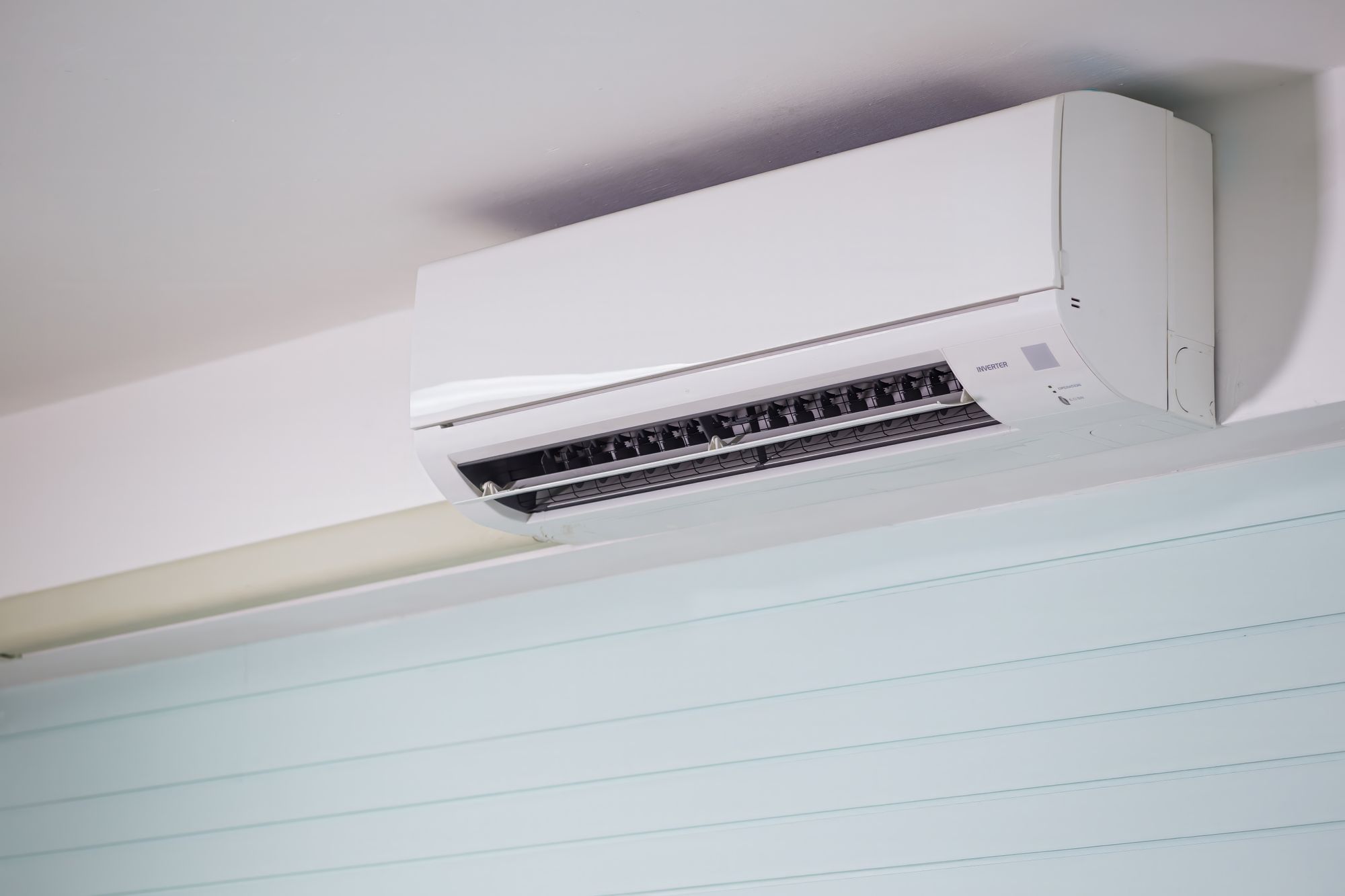
Ductless mini splits - $3,000–$8,000+ installed The "full comfort" option. Ductless mini splits provide independent temperature control for garages, handling both heating and cooling in a single zone system. A ductless mini split is the right call if you use the garage year round. Equipment alone will run $700–$3,500 depending on BTU rating and SEER efficiency, and professional install adds the rest.
Why not tie into the house HVAC? Capacity issues aside, code does not allow ducting garage air into your home. You'd risk pulling carbon monoxide, gasoline vapors and other garage fumes into living spaces.
Garage Mini Split Install Costs in 2026
When most people ask how much does it cost to cool a garage long-term, they are really asking about a mini split. Here are 2026 numbers based on current market data from PickHVAC:
| System Size (BTU) | Equipment Only | Full Professional Install |
|---|---|---|
| 9,000 | $700–$1,500 | $3,200–$5,000 |
| 12,000 | $1,000–$2,200 | $3,500–$5,500 |
| 18,000 | $1,500–$2,800 | $4,500–$6,500 |
| 24,000 | $2,000–$3,500 | $5,500–$7,500+ |
Mini split installation costs range from $2,500 to $7,000 on the equipment-and-labor side. A 1-car garage mini split costs $3,200 to $5,200 to install under standard conditions. Professionally installed ductless mini splits for 2-car garages run $4,500–$7,500+.
Some brands sell ductless mini kits with pre-charged line sets for DIY. But many warranties need a licensed HVAC tech to pull vacuum, release refrigerant and sign off. DIY installation can reduce labor costs but risks warranty issues, something to weigh carefully.
Electrical Work, Permits and Hidden Costs
The electrical side can surprise you more than the price of the air conditioner itself. Here's what to budget for:
- Mini splits at 18,000 BTU and up usually need a 208/230V dedicated circuit. Some 9,000–12,000 BTU models can run on 115V, which makes the electrical work easier.
- Running a new circuit with a weather-tight disconnect near the outdoor unit costs $500–$1,600 depending on how far it is from the electrical panel and what condition the panel is in. If your panel is full or outdated, a panel upgrade can add $1,500–$4,000.
- Per 2023 NEC 210.11(C)(4), an attached garage needs at least one 120V, 20A branch circuit for its receptacles, with no other outlets on it except outdoor receptacles. That matters if you're plugging in a portable air conditioner, so don't overload that circuit.
- Installation costs may increase by $200 to $1,500 for permits. Many jurisdictions require HVAC and electrical permits plus inspections. Skipping permits can hurt insurance coverage and resale value.
- In North Carolina, certain simple swaps like a like-for-like water heater replacement have specific permit exemptions, but those do not apply to new HVAC installations. Always check local rules before assuming you can skip the permit for electrical panel work or a new split system.
How Much Does It Cost to Run a Garage Air Conditioner Each Month?
Example 1 - 1-car garage, 12,000 BTU mini split: Drawing about 1.2–1.5 kW while running, 6–8 hours a day, at $0.18/kWh. That is about $1.80–$2.15 per day, or $55–$65 per month during peak summer.
Example 2 - 2-car garage, 18,000–24,000 BTU unit: Pulling 2.0–2.5 kW at the same rate and hours, about $90–$150 per month. Over a 3–4 month cooling season, that's $270–$600 added to your electric bill.
Quick formula: (kW draw) × (hours/day) × ($/kWh) × 30 = monthly cost. Plug in your local rate and you'll have a solid estimate.
DIY vs Pro: Where You Actually Save
- Refrigerant work (pulling vacuum, charging refrigerant lines), 240V wiring, and panel upgrades for a ductless mini split, hire a licensed electrician and licensed HVAC tech
- Wall penetrations through masonry or any install where you are unsure about code
Get multiple quotes with separate line items for equipment, labor, electrical work and permits. That way you can decide what to handle yourself, like mounting the indoor head or running the condensate line, without voiding the warranty on the expensive stuff.
Special Garage Situations That Change the Cost
- Coastal or hurricane-prone areas like Wilmington, NC need outdoor condensers on proper stands above possible flood water. Hurricane Florence dropped a record 23.02 inches of rain on the Wilmington airport over four days in September 2018, about a 1-in-1,000-year rainfall event. If your condenser sat at grade, it would've been under water. That slightly increases labor and materials cost but protects your investment.
Safety, Air Quality and Cooling Limits
- If your garage is in a pre-1978 home, the EPA tells DIYers to avoid open-flame paint removal and uncontrolled power sanding because of possible lead paint dust. The EPA's lead RRP rule generally doesn't apply to you working on your own home, but the health risk is real regardless.
FAQ
What's the Cheapest Way to Cool a 2-Car Garage?
Combine DIY door insulation ($50–$200), seal the major air leaks, and add one or two high-velocity fans ($30–$200 each). If that's not enough, a budget portable AC in the $350–$500 range gets you real cold air without touching the electrical panel. Total spend: under $800.
Can You Plug a Portable AC Into Any Garage Outlet?
Most portable units in the 8,000–14,000 BTU range run on standard 120V but can draw close to a 15A circuit's limit. Use the dedicated 20A garage circuit where possible and avoid long, undersized extension cords. Overloading a shared circuit is a fire risk.
How Do I Know If I Should Call an HVAC Pro Instead of DIY?
If you're adding a ductless mini split, touching 240V wiring, cutting holes in masonry walls, or unsure about permits and code, bring in a pro. You can stick to insulation, weatherstripping and plug-in cooling equipment if you want to stay firmly in DIY territory. The money you save doing your own insulation work can free up budget for you to hire the right people for the technical stuff.