Heat Pump vs Electric Heater for Garage: What Actually Works Best?
If you're standing in a cold garage trying to figure out whether to hang a mini split on the wall or just plug in an electric heater, you're asking the right question. I'm Ken, a homeowner in Wilmington, NC, and I've spent a lot of time working in my garage through every season. The answer depends on how often you use the space, how well it's insulated, and what you're willing to spend upfront versus in the long run.
The short answer: For a garage you use regularly, as a workshop, gym or place to hang out, a ductless heat pump (mini split) is usually the better investment. It has heat at about one-third the electricity cost of a resistance heater and it can cool the space in summer from the same unit. But if you only fire up the garage heater a few times a month, or the space is drafty and uninsulated, an electric heater at $150–$500 gets you enough heat without the $3,000+ commitment of a heat pump install.
This comparison breaks down the cost to buy and install, the cost to run, comfort, how hard it is to install, and what works for which garage type and climate. I'll also go over the electrical code and incentive details that matter if you are in North Carolina or a similar state.
What Is a Ductless Garage Heat Pump?
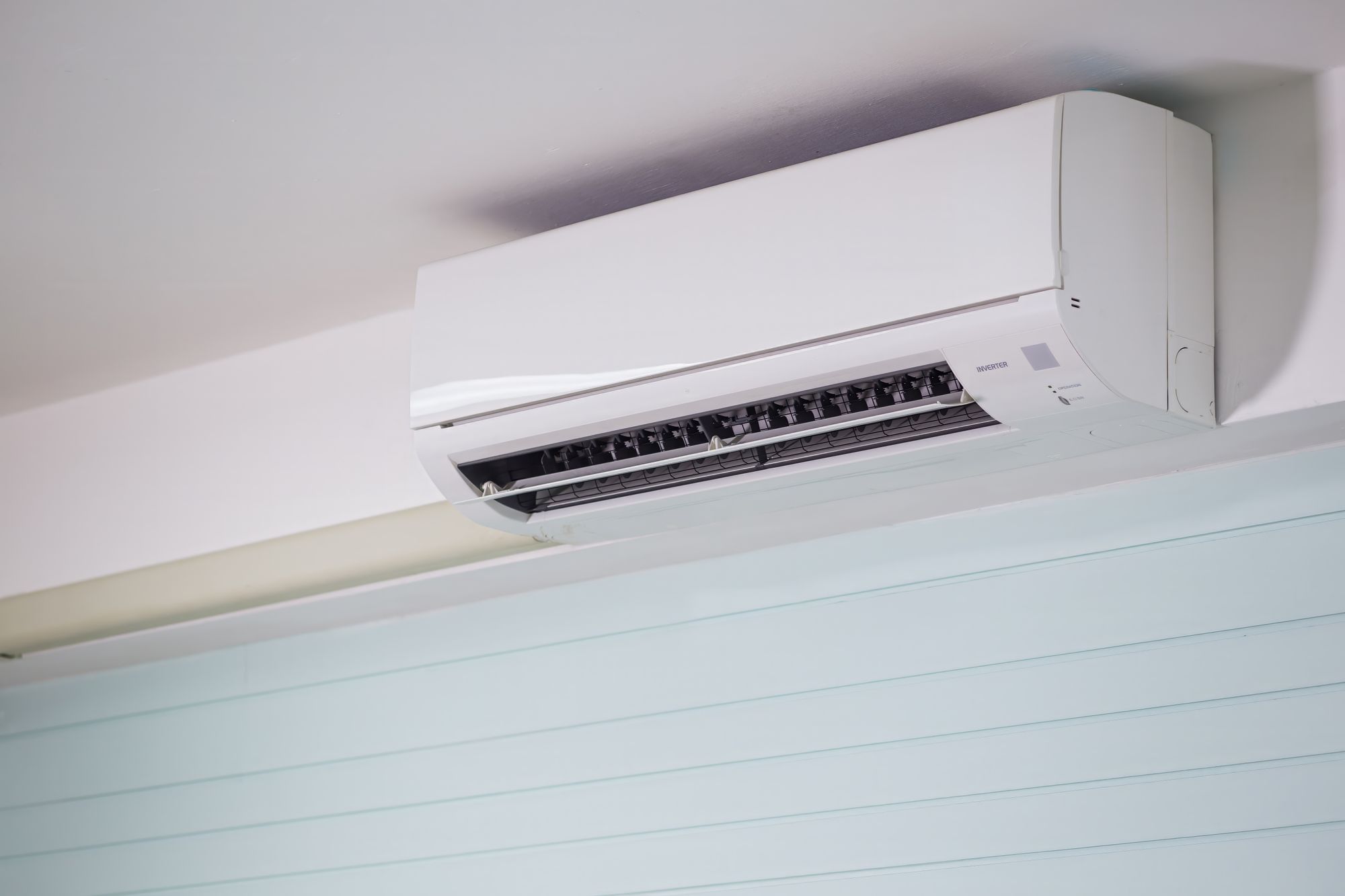
Mini-splits are electric and they can act like heat pumps. Instead of using heating elements to produce heat from scratch, they are moving heat from the outside air into the garage. That can sound odd when it is 40°F outside, but the refrigerant cycle pulls it off efficiently down to temperatures that are surprisingly low. There are usually 2 to 4 units of heat delivered for every unit of electricity a heat pump uses. That's why the energy costs are so much lower than resistance heat.
Here's what makes a mini split strong for use in a garage:
- Heating and cooling in one unit. Mini-splits have both heating and cooling functions - you get AC in July and warmth in January without buying two systems.
- Much lower cost to run per BTU compared with electric resistance heaters when you are running heat for hours each week.
- Precise temperature control through a wall remote and inverter-driven compressor. The unit changes output to hold a steady temperature instead of cycling on and off.
- Quiet operation. Many indoor heads run under 35 dB at low speed, and they do not stir up dust from cutting the way a big fan-forced heater can.
Higher upfront cost is one of the honest downsides: usually $3,000–$6,000 installed for a single zone, and installation of heat pumps usually needs professional help due to complex setup, especially the refrigerant work, which needs an EPA 608-certified tech. Mini-splits often have ENERGY STAR® recognition for efficiency, but that efficiency only pays off if you actually use the space enough to recoup the investment.
What Is an Electric Garage Heater?
An electric resistance heater works simply: electricity flows through heating elements, the elements get hot and a fan blows hot air into the room (or, with infrared heaters, radiant energy heats objects directly, reducing wasted heat). COP is always 1.0. Every watt of electricity that goes in becomes a watt of heat. There is no combustion waste, no carbon monoxide risk and no need for proper venting like a gas heater or heater that runs on fuel oil.
Strengths for garage use:
- Low upfront cost. Garage heaters range from $30 to over $500 in price for most residential units, and electric garage heaters plug into standard outlets at lower power levels. You can usually get a garage heater for about half of what a mini-split costs.
- Simpler installation. A 120V plug-in model is a project you can finish in a weekend. Even 240V hardwired ceiling units are within reach for a DIYer who is competent and can run a circuit.
- Instant heat. Electric heaters can provide quick heat, making them suitable for short-term use. You feel warmth near the unit within minutes.
- No combustion, no venting. Unlike a natural gas, propane heater or heater that runs on diesel, there's no exhaust to deal with and no risk of carbon monoxide.
The limitations are real, though: electric heaters have lower long-term operating expenses only when compared to some fuel sources like propane. A heat pump costs a lot less in electricity per BTU. They offer no cooling at all. And electric heaters perform the same regardless of outdoor temperature, which is a plus for reliability but does not help them compete on efficiency.
Heat Pump vs. Electric Heater Comparison
| Factor | Ductless Heat Pump (Mini Split) | Electric Garage Heater |
|---|---|---|
| Best for | Daily use, workshop/gym, well insulated garage | Occasional projects, drafty space, tight budget |
| Typical installed cost | $3,000–$6,000 (single zone, 9,000–18,000 BTU) | $100–$1,000 for unit + possible wiring ($0–$1,000) |
| Monthly operating cost (moderate use, mild winter) | \~$34/month (est. 200 kWh at $0.17/kWh) | \~$102/month (est. 600 kWh at $0.17/kWh) |
| Cooling ability | Full AC + dehumidification | None |
| DIY-friendliness | Partial DIY; pro needed for refrigerant and often electrical | Many models fully DIY; 240V may need electrician |
| Noise and air movement | Quiet, steady airflow | Louder fan, can blow dust in larger spaces |
| Year-round usefulness | Heating, cooling, dehumidifying | Winter heating only |
The headline takeaway: a heat pump wins for long-term comfort and energy savings if you use the garage a lot; an electric heater wins for tight budgets or light use. Choosing between a heat pump and an electric heater depends on usage frequency and budget.
Factor 1 - Upfront Cost and Incentives
Heat pump costs: In Wilmington, a single-zone mini split installed runs about $4,600 on average, with a range of $2,300 to $11,900 depending on capacity, line set length, electrical work and whether you need coastal corrosion coatings (add $200–$500 for salt-air protection). In North Carolina as a whole, single-zone systems are usually in the $3,000 to $5,200 range installed. Multi-zone systems with three to four indoor heads can hit $7,500 to $13,000, but that's too much for most garage-only setups.
Electric heater costs: A quality plug-in or wall-mounted electric heater runs $100–$500 for the unit itself. Heavy-duty 240V ceiling-mount or infrared heaters for larger garages can reach $1,000–$2,000. Installation cost depends on your existing wiring. If you already have a 240V circuit in the garage, you might spend nothing on installation. If you need an electrician to run a new circuit, you can budget $300–$1,000 for that work. Propane garage heaters provide 30,000 to 60,000 BTUs of heat and natural gas heaters connect to home gas lines for consistent heat, but both need proper venting to the outside and add complexity that electric skips.
Incentives. Here's what has changed: The federal 25C Energy Efficient Home Improvement Credit (30%, up to $2,000 for heat pumps and heat pump water heaters) only covered property placed in service from 2023 through December 31, 2025. If you're installing in 2026, that credit is gone. On the state side, as of September 1, 2026, Energy Saver NC's HEAR rebates no longer pay to replace gas or other fossil-fuel appliances (electric-to-electric upgrades only), and heat pump projects may need insulation and air sealing done alongside. That can change the math. The rebate might help, but it may also need additional work that raises the total project cost.
Factor 2 - Operating Cost and Efficiency
The efficiency difference is simple. A heat pump is moving heat rather than creating it. That is giving it a coefficient of performance (COP) of about 2.5 to 4 in mild winter temperatures. Field studies from the DOE's Building America program show seasonal COPs around 2.6–2.8 in mild climates, with COPs reaching 3–4 when outdoor temps stay around 45°F. An electric resistance heater has a COP of exactly 1.0. Every kilowatt of electricity that goes in is one kilowatt of heat out. Mini-splits are operating more efficiently than traditional garage heaters by a wide amount.
A real-numbers example for a two-car garage: Say you run a 5,000W (5 kW) electric heater 6 hours a day, 20 days a month during a mild Wilmington winter. That's 600 kWh per month. At $0.17/kWh (typical for Duke Energy Progress residential rates in this area), you are paying about $102/month. With a seasonal COP of 3.0, a mini split delivering the same heat output is drawing about 1,667W, using about 200 kWh over the same schedule. That's about $34/month. That's $68/month in savings, or several hundred dollars across a heating season.
Nuances worth noting: If you only heat the garage a few hours a month, that $68/month difference barely matters, and you'll never recoup a $3,000+ install cost. Also, heat pumps lose efficiency as outdoor temperatures drop below freezing. COP might fall to 2.0–2.5 at 30°F and lower in extreme cold. But Wilmington rarely sees extended sub-freezing weather, so this is less of a limiting factor here. Modern cold-climate heat pumps can maintain efficiency in extreme cold temperatures, with confirmed COP data showing many units at COP 1.75+ even at 5°F.
Winner: Heat pump (mini split). It has the same comfort with far fewer kWh. That really adds up if you keep the garage conditioned for long periods. If your garage is just a place you heat for 30 minutes on cold days, the efficiency advantage won't matter enough to make the cost difference worth it.
Factor 3 - Comfort and Heating and Cooling Performance
Humidity and air quality: Mini splits can pull moisture out in cooling mode. That is crucial in humid climates if you want to protect tools, stored paints and finishes. In heating mode, they do not create the same dry, strong air that a big fan-forced electric heater does. Both options avoid combustion waste. Unlike a gas heater, propane heater or heater that runs on fuel oil (which can produce up to 75,000 BTUs per hour but need proper airflow and carry carbon monoxide risks). Ventilation is still important for woodworking or finishing regardless of your heat source.
Factor 4 - Installation, DIY and Code
Typical steps include: mounting the indoor head on the wall, setting up the outdoor condenser (on a pad or elevated mount), drilling a hole through the wall for the line set, running the insulated refrigerant lines and condensate drain, wiring a dedicated 240V circuit with a disconnect, then vacuuming the lines and charging the refrigerant.
Which parts can you DIY? Mounting the indoor head, drilling the sleeve hole, running the line set physically, and setting up brackets - a handy homeowner can handle all of that. But refrigerant handling (vacuuming air from the lines and charging) requires an HVAC tech with EPA Section 608 certification. It is a legal and practical requirement. Most manufacturers also void the warranty without professional install. The electrical work - running a new 240V circuit from your panel - usually needs a licensed electrician and a permit in most jurisdictions. Proper installation matters here. A poorly charged system or undersized line set will destroy your efficiency.
At the simple end, electric garage heaters plug into standard outlets. A 120V, 1,500W plug-in is true DIY - mount it on the wall or ceiling, plug it in, done. Garage heaters need at least 3 feet of clearance from combustible materials, so follow the manufacturer's specs on mounting.
For larger spaces, you'll likely need a 240V hardwired unit. Electric heaters may need special wiring for high-power models - a 5,000W heater typically draws about 21 amps at 240V, requiring a dedicated 30A breaker and appropriate gauge wire. If you're comfortable running cable from the panel, installing a breaker and wiring a disconnect, this is manageable DIY. If not, an electrician will handle it for a few hundred dollars.
Code concerns I want to flag:
The 2023 NEC exception that exempted listed HVAC equipment (like outdoor AC and heat pump units) from the outdoor GFCI rule expired on September 1, 2026. However, North Carolina still enforces the 2020 NEC-based NC Electrical Code, so the 2023 rules are the national model, not yet local law. What does that mean for you? If you are in NC, your inspector is working from the 2020 code. But other states may have adopted the 2023 NEC already. Always check with your local Authority Having Jurisdiction (AHJ) before starting work.
On permits: heat pump installations almost always require permits for both mechanical and electrical work. Hardwired electric heaters typically need an electrical permit. Plug-in units generally don't require any permit - which is another point in their favor for simplicity. Proper sizing of the circuit, wire gauge and overcurrent protection is not optional regardless of permit requirements.
Winner: Electric heater - far simpler to install and more DIY-friendly, especially if you stick to a quality plug-in or have an existing 240V circuit. A heat pump is a bigger, more regulated project that is usually at least a DIY/pro hybrid, with permits and specialized work you can't skip.
Factor 5 - Garage Types and Climates
- Moderately insulated 1–2 car garage (insulated walls, decent door): A mini split with 9,000–18,000 BTU can comfortably cover a garage of this size. In a mild climate with moderate insulation, a mini split in the 12,000–18,000 BTU range handles it well. A two-car garage usually needs about 45,000 BTUs if you are doing a full heat load calculation for extreme conditions. An electric heater in the 4,500–7,500W range can also work, but energy costs will be higher by a noticeable amount if you are running it several hours a day.
- High-end garage heaters can reach 200,000 BTU/hour for commercial or very large spaces, but for typical residential larger garages, you are looking at output needs that are much smaller.
Heat Pump vs. Electric Heater: Which Should You Choose for Your Garage?
For my own situation, here's my honest take: for a typical Wilmington-area two-car garage that I'm in several days a week, I'd go with a mini split every time. The summer cooling alone is worth it. I can't do finish work when it is 95°F and dripping humid. But when a neighbor asks me about heating a detached garage they use twice a month to mess with a mower, I tell them to grab a 240V wall-mounted electric heater and save themselves $4,000. Match the tool to the job.
FAQ - Heating a Garage with a Heat Pump or Electric Heater
Can You Run a Heat Pump and an Electric Garage Heater Together?
Yes, and sometimes it can make good sense. Use the mini split for baseline comfort, keeping the garage at, say, 55°F, and fire up an electric heater near your work area when you need concentrated warm air right where you're standing. The heat pump is doing the heavy lifting efficiently. The resistance heater is handling spot heating needs. Just make sure the two are not on the same circuit. You should size your electrical service appropriately if you're adding multiple large loads.
Is a Heat Pump Efficient Enough for a Garage with Frequent Door Openings?
Frequent door openings hurt efficiency for both options. You are losing conditioned air every time the door goes up. In mild climates, a heat pump can recover reasonably quickly because it can ramp up output, but you are still wasting energy. If you are running an auto-hobbyist setup where the door is open half the time, consider strategies like limiting open-door time, adding an air curtain or going with a "good enough" temperature of 50°F instead of trying to hit 68°F. Neither a heat pump nor an electric heater will be cost effective if the door is open constantly.
DIY Mini Split Install for a Garage?
Partially. You can handle mounting the indoor head, drilling the wall penetration, running the line set and setting up the outdoor unit on a pad or elevated mount if you're handy. But you'll need an HVAC tech for evacuating the refrigerant lines and making the final connections. That needs specialized tools and EPA certification. You'll also likely need a licensed electrician for the 240V circuit in most areas, and permits for both electrical and mechanical work. A realistic approach is doing the prep and mounting yourself and hiring a pro for the refrigerant and electrical sign-off.
Do You Need to Upgrade Your Electrical Panel for a Garage Heater or Heat Pump?
Maybe. A typical single-zone mini split draws 15–25 amps at 240V. About 21 amps at 240V is what a 5,000W electric heater draws. Either one needs a dedicated breaker. Look at your panel: if you have open breaker slots and your main service is 200A, you are probably fine adding one new circuit. But if you are on an older 100A panel and you've already added an EV charger or other large loads, you could be pushing the limits. Have an electrician do a load calculation if you are unsure. It's a cheaper than finding out the hard way.