Mini Split vs Portable AC Electricity Cost: What's Cheaper to Run?
After running a ductless mini split and a portable air conditioner in the same bonus room over different summers, mini split vs portable AC electricity cost was something I had to look at. I'm Ken, a homeowner in Wilmington, North Carolina and if you're trying to decide between these two and the power bill matters to you, here's what I learned from tracking my own use and looking into the specs.
The short answer: If you run it every day, a modern inverter mini split uses 30–50% less electricity than a portable AC that has about the same cooling power. For a 12,000 BTU load running 8 hours a day over a 90-day summer, a mini split at 22 SEER2 costs about $24 per month, while a portable unit with a CEER around 10 ends up closer to $53 per month, sometimes higher once you figure in air leaks. You can get the money back for the mini split in about 3–5 summers of regular use, even though it costs more up front. If you rent or you only need a few weeks of cooling per year, the portable's low buy price and zero-permit setup may still make sense even though it uses more energy.
What Is a Ductless Mini Split?
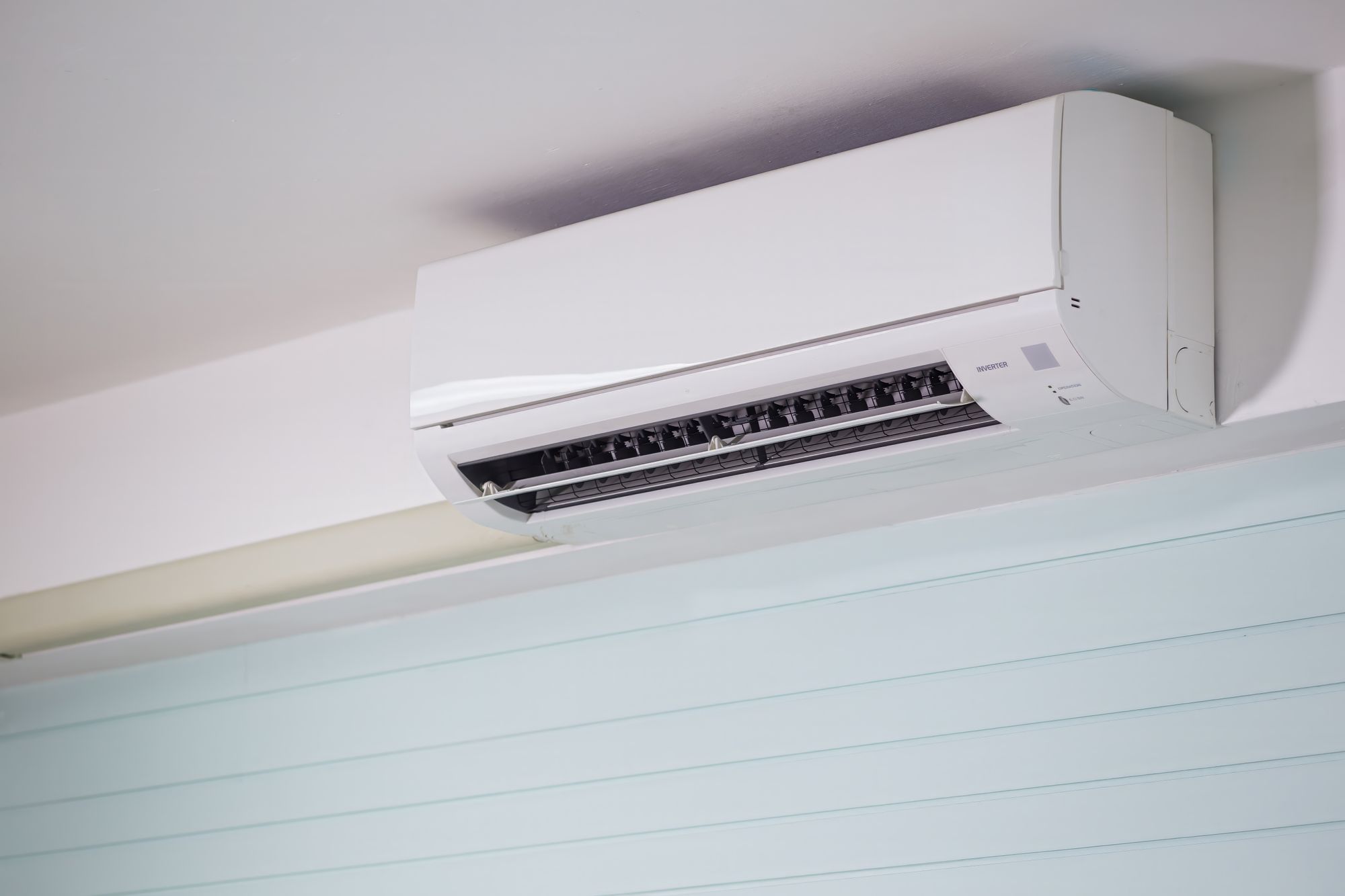
Mini split systems use inverter compressors. Instead of slamming on at full power and cycling off repeatedly, the compressor ramps down to as low as 10% of maximum output once the room hits your setpoint. That modulation cuts energy waste at partial load, which is where you spend most of your cooling hours. Because there is no ductwork, you also skip the 20–30% energy loss that ducted central air systems leak through attic runs and poorly sealed joints.
One detail that does not show up in kWh but affects the purchase decision is that most units need a dedicated 240V circuit and professional installation required by code, including wall penetration for the line set. That adds to the upfront cost but it does not change your per-hour operating costs.
What Is a Portable AC?
First, portable ACs usually deliver about 30% less cooling than rated. The number on the box is often the ASHRAE number and says "14,000 BTU," and it does not reflect what you actually feel. The SACC (Seasonally Adjusted Cooling Capacity) is a rating that accounts for real losses, and it often ends up 20–30% lower. A "14,000 BTU" portable unit might deliver closer to 10,000–11,000 BTU of real cooling power, but the compressor still draws full wattage.
Third, most portable ACs run with fixed-speed compressors that cycle on and off at full power, which is different from mini split inverter technology. Portable air conditioner units usually have CEER ratings between 6 and 10, and new DOE minimum standards that took effect in January 2025 raised the floor, but even compliant models rarely match a mid-range ductless mini split. Portable units that are in the common 10,000–14,000 BTU range draw 900–1,500W from a standard 120V outlet.
Mini Split vs Portable AC Electricity Cost
Here's a side-by-side look at how a single room compares. With a room that is about 300–400 sq ft, the example uses a 12,000 BTU cooling load with a US average electricity rate of about $0.15/kWh.
| Factor | Ductless Mini Split | Portable AC |
|---|---|---|
| Best for (electricity cost) | Daily summer use, long term solution | Occasional spot cooling, temporary cooling needs |
| Typical efficiency rating | 18–30+ SEER2; 10–15 EER2 | 6–12 SEER2 equivalent; 6–10 CEER |
| Input power (12,000 BTU capacity) | \~500–900W cruising; \~1,000–1,200W peak | \~1,100–1,500W compressor on |
| Estimated cost per hour at $0.15/kWh | $0.08–$0.14 | $0.17–$0.23 |
| Est. monthly cost (8 hrs/day, 30 days) | \~$19–$24 | \~$40–$55 |
| Purchase price (installed / purchased) | $1,500–$5,000 installed | $300–$900 |
| Typical lifespan | 15–20 years | 5–10 years |
The headline: for steady, everyday cooling of the same space, the mini split cuts electricity cost by roughly 40–55% compared to a single-hose portable AC unit.
Actual Watt Draw and Cost per Hour
Take a mini split that is 12,000 BTU and rated at about 22 SEER2 with an EER2 around 12. On a 95°F day when it's running at full power, it pulls about 1,000W. But once the room cools to setpoint, the inverter compressor is turned back and the unit is running at 500–700W. Over an 8-hour afternoon, the average draw might end up around 545W, or about $0.08/hour at $0.15/kWh.
Now take a portable AC that is labeled "14,000 BTU" and has a CEER around 8. When it is running, the compressor pulls about 1,400–1,600W. Because it's a fixed-speed compressor, it cycles at full power, shuts off, then comes back on. The practical average over an hour, accounting for cycling, can often work out to 1,200–1,400W. At $0.15/kWh, that's about $0.18–$0.21 per hour. With slightly better CEER (around 10), portable AC units might end up closer to $0.17/hour, but they're still above the mini split.
SEER2, CEER, Air Leaks and Humidity
Efficiency ratings can tell you how much cooling you get per unit of electricity. Mini-splits usually have a SEER2 rating of 18–30+. Portable ACs generally have a SEER2 equivalent of 6–12. That difference alone accounts for a large chunk of the electricity cost gap, but it is not the whole story.
The hidden energy cost with single hose models is infiltration. Portable AC units can create negative pressure that pulls warm outdoor air into the room through every crack and gap. The unit then has to cool and dehumidify that extra warm air, spending more electricity on work that would not exist with a sealed ductless system. Even with a well-sealed window kit, the exhaust hose itself can give off heat back into the room from its internal components, and that adds to the load.
Humidity control matters here, especially if you live in coastal North Carolina. A mini split's inverter compressor can run at low speed for extended periods, keeping the evaporator coil cold enough to pull moisture out of the air in a steady way. Because of this sustained low-speed operation, mini-splits offer better humidity control than portable ACs. A portable AC's fixed-speed compressor cycles on and off, and during off-cycles moisture can re-evaporate from the coil back into the room. The result is that the room feels sticky at 72°F with a portable, so you drop the setpoint to 70°F or 68°F, burning more electricity. With a mini split, 75°F at lower humidity often feels more comfortable than 72°F with poor humidity control.
Mini-splits can reduce energy waste by adjusting cooling output to match the load rather than running at full power and shutting off. That variable output is why their seasonal efficiency numbers stay high across a range of outdoor temperatures.
How Long You Run It
Scenario A: Hot, humid climate, daily use. Think Wilmington, NC or anywhere on the Southeast coast. You are cooling a bonus room that is 300–400 sq ft. You run it 8 hours a day for 120 days. A mini split at ~22 SEER2 is averaging about 700W (accounting for hotter days pushing the compressor harder). That's 0.7 kW × 8 h × 120 days = 672 kWh per season, or about $101 at $0.15/kWh. A portable AC at ~10 CEER is averaging about 1,300W with infiltration losses included: 1.3 kW × 8 h × 120 days = 1,248 kWh, or about $187. In this scenario, the mini split can save about $86 per cooling season.
Scenario B: Mild climate, occasional use. A guest room in a moderate climate, 4 hours a day, 30 days per year. Mini split: 0.6 kW × 4 × 30 = 72 kWh, about $11. Portable: 1.2 kW × 4 × 30 = 144 kWh, about $22. The difference is $11 per season. At that rate, getting back a $2,000+ ductless mini split installation premium takes decades on electricity alone.
Scenario C: Detached garage or workshop, weekends only. You cool it 6 hours on Saturday and Sunday, maybe 20 weekends per summer. Mini split: 0.7 kW × 6 × 40 days = 168 kWh, $25. Portable: 1.3 kW × 6 × 40 = 312 kWh, $47. A $22 annual difference. Unless you're also using the mini split for heating in winter (where its heat pump side adds value), the portable might be the practical call for a workshop you use now and then.
Electricity rates shift the math. At $0.20/kWh or higher, Scenario A's annual gap goes from $86 to $115+. In areas with cheap power ($0.10/kWh), the gap gets smaller but does not go away.
Total Cost Over 5–10 Years
Mini-splits cost $1,500–$5,000 up front, which covers the equipment plus professional installation by a licensed technician. They can last 15–20 years with proper maintenance: cleaning filters, washing the outdoor unit coil, and an occasional professional check on refrigerant charge. Electricity costs for mini-splits are $500–$1,500 over 5 years, depending on usage and local rates.
Portable ACs cost $300–$900 up front. There is no permanent installation, no permit and it is ready to use within 30 minutes of setup. But portable ACs usually last 5 to 10 years before you need a replacement, so you may buy two units in the same window a single mini split covers. Electricity costs for portable ACs are $1,200–$3,000 over 5 years. Add a second portable buy ($300–$900) around year 6–8. The total cost gap between the two options gets smaller or turns around completely when you look at 10+ years.
Here's a concrete 5-year example for a single room in a hot, humid climate (Scenario A above, $0.15/kWh):
- Mini split: \~$3,000 installed + \~$505 electricity (5 × $101) = \~$3,505 total.
- Portable AC: \~$500 purchase + \~$935 electricity (5 × $187) = \~$1,435 total.
At year 5, the portable still looks cheaper overall. But extend to 10 years: the mini split is adding ~$505 more in electricity ($4,010 total). The portable is needing a replacement unit (~$500) plus ~$935 more in electricity, and that is adding up to ~$2,870. By year 10, the gap is about $1,140. By year 12–15, the mini split often catches up and passes the portable on total cost, while still running on the original equipment.
Many utilities and state programs offer rebates on high-SEER2 mini split systems. Those can trim $200–$1,000 off the installation costs and shorten the payback window.
Comfort, Noise and Your Electricity Use
Mini-splits provide better energy efficiency and quieter operation. Indoor units run at about 25–35 dB, which is about the volume of a library. They maintain consistent temperatures more effectively than portable units because the inverter compressor holds steady output rather than cycling between full blast and off. That consistency, combined with better humidity removal, means you can set the thermostat at 75°F and feel comfortable. In the Southeast, drier 75°F air feels cooler than sticky 72°F. That translates directly into fewer kWh.
Portable ACs are louder than mini-split systems, often 50–60 dB at last range. That is about the level of a normal conversation, happening continuously by your bed or desk. The noise often pushes you to crank the setpoint lower, hoping the unit will "feel" like it is doing more. That shift in behavior can add runtime and more electricity on your bill.
Mini Split vs Portable AC: Which Should You Choose for Electricity Cost?
Choose a ductless mini split if:
- You can own the home and expect to stay at least 3–5 more summers.
- You're cooling a single room or larger spaces 6–10 hours most days (bonus room, main bedroom, finished attic, garage workshop).
- Your local kWh rate is $0.12 or higher, or you live in a hot, humid climate.
- You can value quiet operation and stable comfort.
- You are open to the ductless mini split installation process: wall penetration, outdoor unit placement, electrical connections and the work of a licensed technician.
Choose a portable AC if:
- You're a renter who can't make permanent modifications like mounting an indoor unit or running refrigerant lines.
- You might only need cooling for a guest room a few weekends a year or for a few weeks of heat waves (temporary cooling).
- Your budget can't stretch to install a mini split this year. You need a solution before the next heat wave.
- You are okay with higher energy costs in exchange for zero-permit, same-day setup and the flexibility to roll the portable unit between multiple rooms.
I lean mini split for any room I'll cool every summer. Over time, the energy savings add up. The quiet operation alone is worth it in a bedroom. But I still keep a portable around for the kind of job where I need spot cooling for a day or two, like when I'm finishing drywall in a room that doesn't have its permanent installation yet. For long-term use, a mini-split is more practical, while portable ACs work best for occasional cooling needs.
FAQs on Mini Split vs Portable AC Electricity Use
If I only use AC a few weeks a year, is a mini split still worth it on electricity alone?
Probably not. With only 30–60 hours of runtime per summer, the annual electricity savings might be $10–$20. At that rate, the higher upfront cost of a ductless system can take decades to recoup through energy bills alone. In that scenario, a portable AC may be more cost-effective overall, even though it's less energy efficient per hour.
Do Dual-Hose Portables Match Mini Splits on Energy?
Dual-hose designs reduce the negative pressure problem because the unit draws outdoor air through a separate intake hose for condenser cooling instead of using room air. That can eliminate most of the infiltration cost. Some dual-hose inverter portable units reach CEER ratings around 10.5–10.8. That's better than single hose models at CEER 7–8. But they still rarely match a decent inverter mini split's 20+ SEER2. If you're stuck with portable-only options (renter, no permanent modifications allowed), a dual-hose unit is the better pick for reducing energy costs.
What's one thing to do today to lower AC electricity use?
Three things you can do this afternoon:
- Raise the setpoint 2°F once you've got humidity under control. If the room is at 45–50% relative humidity, 76°F feels about as comfortable as 73°F with poor humidity control, and the kWh drop is real.