How to Reduce Humidity in a Garage: A DIY Homeowner's Guide
I live in Wilmington, North Carolina, where summer humidity sits above 70% most afternoons. My garage used to fog up, rust my tools, and smell like a damp basement. Here is what I did to fix it, step by step, without hiring a contractor for most of the work.
Key Takeaways
- High humidity causes rust on tools, and it causes mold to grow on stored items, and it can damage vehicles and equipment. The goal is to keep the humidity in your garage below 60% relative humidity, and ideally you want it between 30% and 50%.
- A $10 to $20 digital humidity meter is the first thing to buy so you can step your humidity level instead of guessing.
- The three fastest ways to reduce humidity are to run a portable dehumidifier, improve ventilation with fans and set door openings on dry days, and seal gaps around the garage door, walls and windows.
Why Garage Humidity Matters
Before I took this on, I had a rusty mower deck, warped plywood shelves and cardboard boxes with visible mold on the bottom. Condensation happens when warm air meets cold surfaces, and a garage is full of them: the concrete slab, metal door panels and bare steel tools.
Relative humidity is simply how much water vapor the air holds compared to its capacity at that temperature. When warm, moist air hits a cool concrete floor or a cold garage door, water condenses out. In an attached garage, that humid air and any mold spores can leak into the house through gaps around shared walls, doors and pipe penetrations.
The EPA recommends keeping indoor humidity below 60%, ideally 30% to 50%. Wet materials dried within 24 to 48 hours usually won't grow mold, and a homeowner can usually clean up mold spots under about 10 square feet (about 3x3 feet). Above that, call a cleanup company.
How Humid Is Your Garage, Really?
DIY fixes are going to work best when you know your starting humidity level and where the moisture comes from. A humidity meter is essential for keeping an eye on garage humidity levels. Grab a digital one for $10 to $20 and place it at chest height, away from direct sunlight and exterior walls. Log readings in the morning, in the afternoon and in the evening for at least a week.
| Relative Humidity | What It Means |
|---|---|
| Under 60% | Generally fine; keep monitoring |
| 60% to 70% | Borderline; watch for condensation on cold surfaces |
| Above 70% for days | Act now; mold growth becomes likely |
Walk the space and look for clues: white efflorescence on the concrete slab, water wicking up walls, drips around the garage door frame, fogged exterior windows, and rusty tools. Fogging and condensation can lead to rust and damage to tools stored in the garage over time.
In winter and in-between seasons, vehicles bring in rain, snow melt and road slush. That wet car dripping onto the floor can spike humidity overnight. Concrete floors absorb moisture from the ground and release it into the air as water vapor. That makes the problem worse.
Try a simple plastic-sheet test for slab moisture: tape a piece of clear plastic that is 2x2 feet to the floor for 24 to 48 hours. Condensation under the sheet means moisture is wicking through the concrete. Plastic vapor barriers under new slabs prevent this, but existing floors may need surface sealing or coating.
Jot down where moisture comes from: the roof, the walls, the slab, the garage door, vehicles or stored wood. That list is going to determine which fixes matter most.
Stop Moisture at the Source First
- Vehicle moisture. Park a wet car over rubber tiles or a plastic tray. Use mats that absorb water under tires. Use a floor squeegee or mop to push puddles toward the drain the same day so the floor dries within 24 hours.
- Bulk water intrusion. Proper drainage directs rainwater away from the garage foundation. It's a good idea to check gutters, downspout extensions and soil grading. Water should slope away from the slab, not toward it. It's a good idea to inspect roof flashing and caulk around windows and doors for failures.
- Garage door seals. Look for daylight around the bottom seal, side weather-stripping and top header seal. Seal gaps and weatherstrip to prevent outdoor humidity from seeping inside. Worn seals are a simple DIY swap.
- Porous storage. Elevating stored items helps prevent moisture absorption from the concrete floor. Use plastic shelving with a 1 to 2 inch air gap underneath. Use airtight plastic bins instead of cardboard boxes for storing stuff in the garage.
- New moisture loads. Don't dry dripping wet clothes in a sealed garage. Avoid leaving open water buckets or running unvented propane heaters. Those are going to dump water vapor straight into the air.
Let Damp Air Out, Dry Air In
Ventilation replaces humid air with fresh air, but it only works when outdoor air is drier than the air inside. In coastal climates, that often means in the mornings or in cooler evenings, not in the middle of the day.
Start simple. Open the garage door partway for 20 to 30 minutes while running a 20-inch box fan pointed outward. If you have a back door or window, crack it open on the opposite side to create cross-ventilation. This is going to pull outdoor air in on one side and push moist air out on the other.
No windows? Consider a through-wall exhaust fan rated around 100 CFM per bay. Installing exhaust fans helps purge humid air from the garage, especially after parking wet vehicles. Improve garage ventilation to reduce dampness whenever you bring in a rain-soaked car or snow-covered equipment.
On days when outdoor relative humidity sits above 70% to 80% (common in Wilmington summers), keep the garage door closed and rely on a dehumidifier instead. Leaving the door open on those afternoons just pumps more moist air inside.
One code note for attached garages: tying the garage into the home's HVAC ducts is usually against code because of carbon monoxide and fume risks. A dedicated exhaust fan venting outdoors is the right approach.
Dehumidifiers, Fans and Air Movement
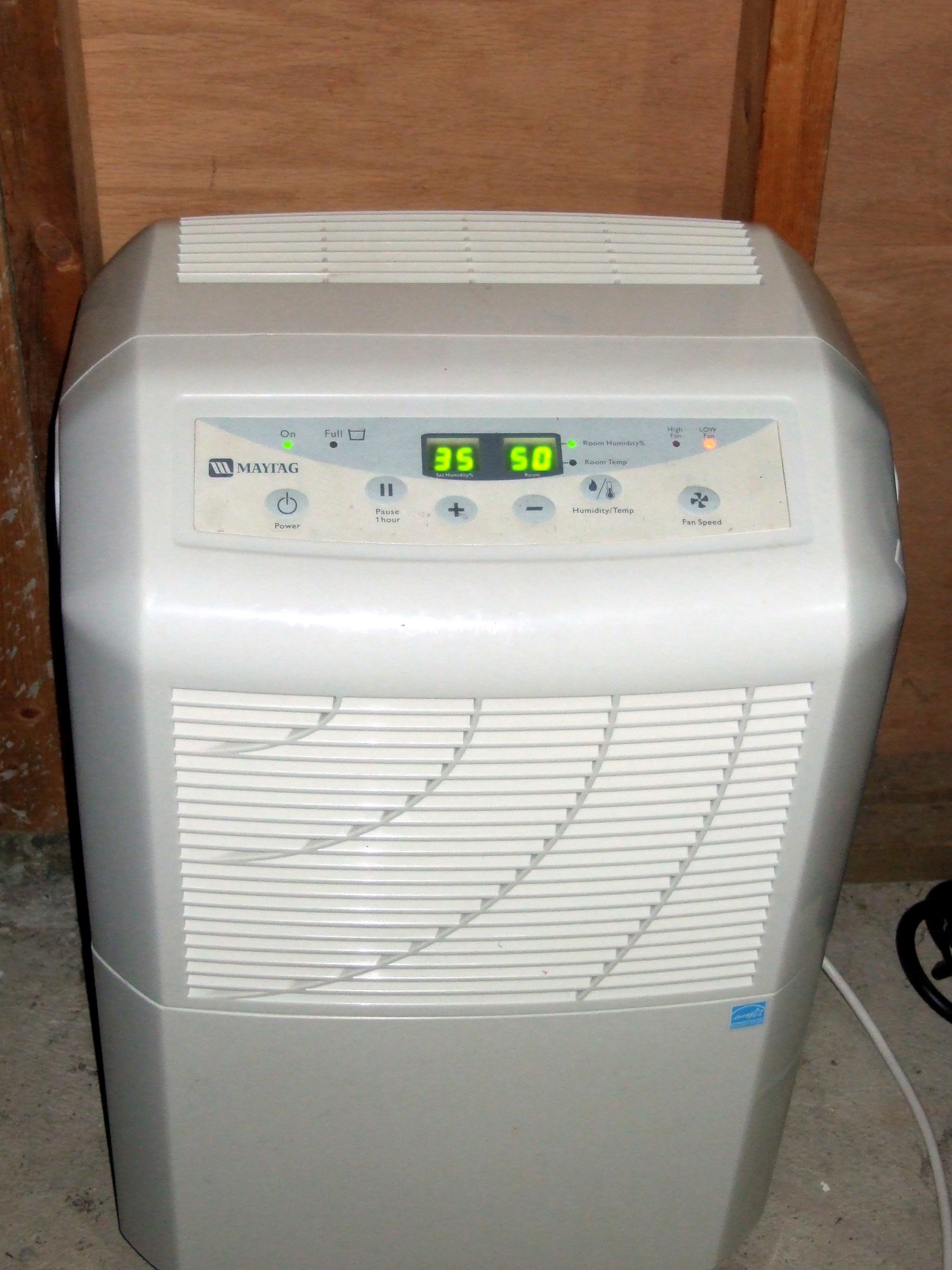
Once bulk water is under control, a dehumidifier plus air circulation is the most reliable way to reduce humidity in a garage through the summer. Dehumidifiers help reduce humidity in garages effectively, and proper air circulation prevents moisture from condensing on surfaces.
Sizing: For most garages in the 400 to 600 square foot range, a 40 to 50 pint per day residential dehumidifier is a solid starting point. A very damp space or a shop larger than 600 square feet may need a 70 pint unit.
Setup: Place the unit near the wettest wall or center of the room. Keep at least 6 inches of clearance around it. Set the humidity sensor target to about 50% relative humidity. Run a hose to a floor drain or condensate pump so you're not emptying buckets.
Air movement matters. One or two oscillating fans or a ceiling fan keep air flowing across cold surfaces, the slab, stored items and the inside of the garage door. Using a fan pointed at the inside of a cold garage door in winter can reduce condensation forming on the panels. I hung a small fan from a ceiling joist near my door. It runs on a timer during cold months.
Energy and safety. A dehumidifier and fans cost money to run, but less than replacing rusted tools or paying for mold remediation. Use a smart plug or the built-in humidistat so the unit cycles off when the target is reached. Keep cords away from wet areas. An attached garage must have at least one dedicated 120V, 20A branch circuit for its receptacles under the 2023 NEC, which gives you enough capacity for a dehumidifier and a fan without overloading anything.
Seal, Insulate and Upgrade the Building Envelope
Garage doors are 3 to 4 times larger than front doors, which means they're the single biggest source of air leaks and temperature swings. Replace the bottom sweep, side seals and top header seal. Adjust the door so it closes flush without visible daylight gaps. Insulating garage doors with a foam-panel kit can help reduce condensation and temperature variations on those large metal panels.
For walls and ceiling, use caulk and expanding foam around electrical boxes, pipe penetrations and the attic access hatch. In an attached garage, it's a good idea to insulate and air-seal the shared wall and house-to-garage door first. This is going to protect the living space from both moisture and fumes.
Waterproofing concrete surfaces can help block moisture migration through the slab. Epoxy or urethane sealers slow vapor transmission and make the floor easier to mop. These coatings do degrade over time, so plan on reapplying every few years.
Cold Climates, Coastal Areas and Attached Garages
Humidity acts differently in a Minnesota winter than a North Carolina summer, so the tactics shift.
- Cold and snowy climates. Snow and ice melt off vehicles create puddles that evaporate into the sealed space. Use trays and a floor squeegee. A safe vented heater plus a fan can warm the floor enough to dry it, but don't seal the garage completely without airflow or you'll trap that moisture. Humidity levels should not exceed 40% at 4°C to -7°C. Condensation on cold surfaces and freezing on windows become real problems above that threshold.
- Coastal and humid regions. Rely on dehumidifiers over ventilation during peak summer hours. Check the hygrometer before opening the garage door. If outdoor air reads higher, keep the door shut. When is the best time to air out? Mornings often have lower dew points and are better for airing out.
- Attached garages. Moisture, fumes and mold can travel into the house through the shared wall. It's a good idea to prioritize sealing the threshold at the house-to-garage door, duct and pipe penetrations and any cracks in the common wall. An insulated, sealed shared wall does double duty: moisture control and fire/fume protection.
- When to call a pro. Standing water after every rain, foundation cracks leaking water, mold covering more than about 10 square feet, or structural worry around the roof or garage door framing are jobs for a contractor.
FAQ
What's a Good Humidity Level for a Garage?
I aim for 40% to 55% relative humidity in my Wilmington garage. That stays under the EPA's 60% ceiling while being realistic in a humid climate. Manage garage humidity between 30% and 50% relative humidity for the best protection of tools, vehicles and stored items. Short spikes above 60% after pulling in a wet car are normal, but the reading should drop back within a few hours with fans and a dehumidifier running.
Keep the Garage Door Open to Reduce Humidity?
Only when the outdoor air is drier than the garage air. It's a good idea to check the hygrometer before and after opening. On rainy or very humid days, leaving the garage door open raises the humidity level inside and makes condensation worse. Timed sessions of 20 to 30 minutes with a fan blowing out work better than leaving it open all day.
Run House HVAC Into the Garage for Humidity Control?
Most building codes prohibit tying an attached garage into the home's supply and return ducts because of carbon monoxide and fume risks. Safer options are a standalone dehumidifier, a dedicated exhaust fan or a ductless mini-split designed for the garage space. Check with a local HVAC contractor or inspector before making any permanent ductwork changes.
Is a Damp Garage Floor Always a Humidity Problem?
Not always. Condensation on a cool slab (a thin, even film in the morning) comes from warm, moist air meeting cold concrete. Actual water intrusion shows up as localized puddles or wet spots after rain. The 2x2 foot plastic-sheet test tells you whether moisture is wicking up through the slab itself.
Will insulating my garage alone reduce humidity?
Insulation doesn't remove moisture. It keeps surfaces warmer, which reduces condensation and helps a dehumidifier and ventilation system work more effectively. The best results come from combining air sealing, insulation and active humidity control rather than relying on any single upgrade. What's the first thing to insulate? Insulate the shared wall of an attached garage first, then tackle exterior walls and the garage door as budget lets.