How to Heat a Room With No Ductwork: A DIY Homeowner's Guide
Fast Ways to Heat a Room With No Ducts
How to heat a room with no ductwork can depend on how often you use it, how big it is and whether you want a permanent fix or something quick. I'm Ken, a homeowner in Wilmington, NC and I've heated rooms with no ducts using everything from a $40 ceramic heater to a ductless mini split that a pro installed.
Here are the top options, ordered by how well they can work for you:
- Ductless mini-split heat pump: This can be best for any room you use daily. It has both heating and air conditioning, runs quietly at 19 to 32 decibels (quieter than a library), and costs far less to run than resistance heat. This is probably the gold standard for ductless heating.
- Wall-mounted or baseboard electric heater: This is a clean, permanent solution for small rooms like bathrooms or home offices. There is no combustion, no outdoor unit and the upfront cost is lower than a mini split.
- Portable electric space heater: This is the cheapest to buy, the easiest to set up, and it can be perfect if you rent or for guest rooms you heat a few times a month. Electric space heaters give you fast, targeted heat for single rooms.
- Vented gas or propane heater: This gives you powerful heat for detached garages or shops where gas is already available. It has to be vented outdoors and professionally installed.
Safety comes first with every option. Pair any heater with working smoke detectors, and if you're burning fuel of any kind, add carbon monoxide detectors on every level of the house. Don't use stoves or outdoor heaters as a substitute for safe indoor heating, and never run a high-draw heater on an extension cord.
What Does "No Ductwork" Really Mean?
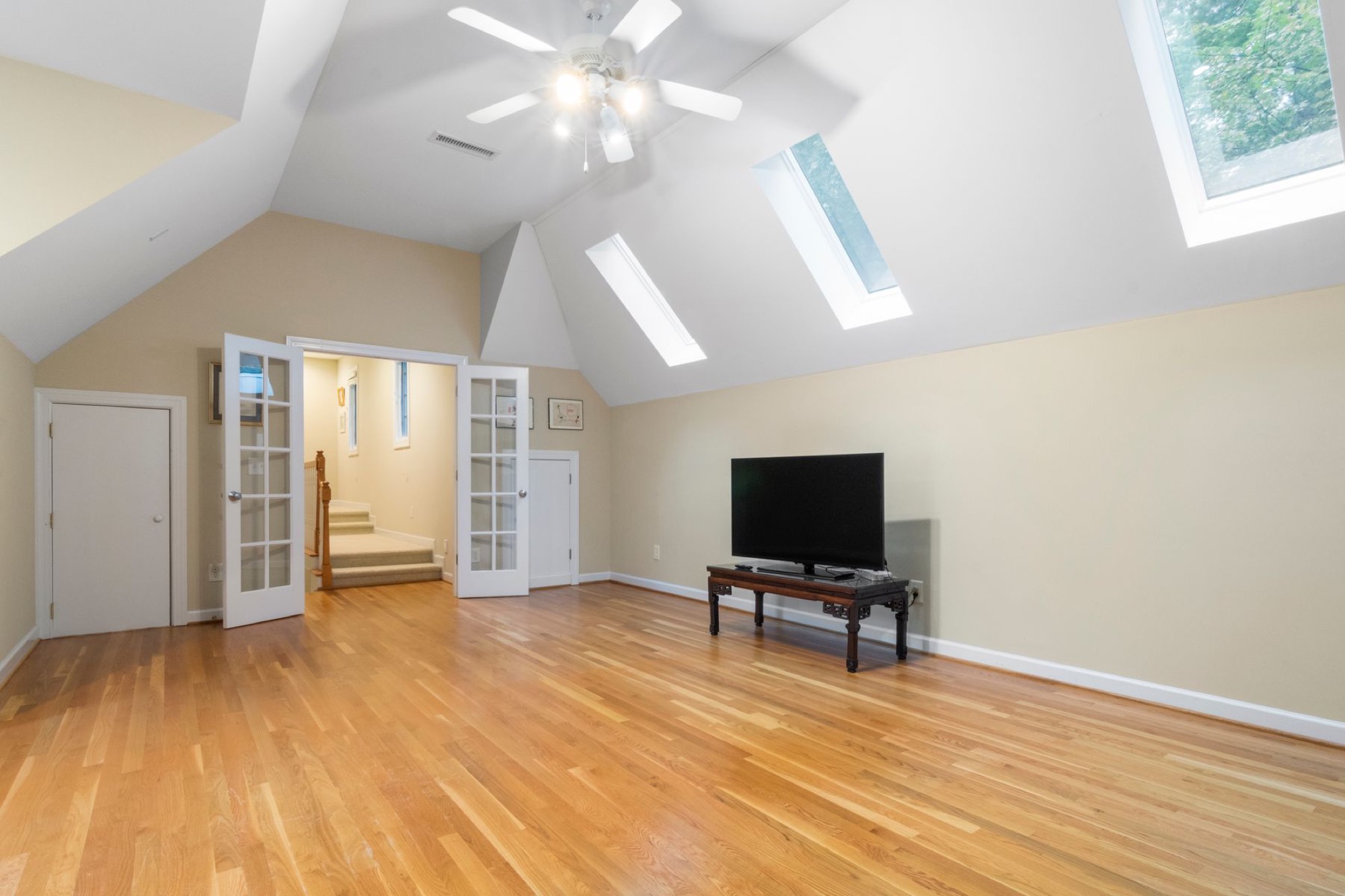
Rooms that usually lack duct access include:
Heating Options for a Room With No Ductwork
| Factor | Ductless Mini Split | Plug-In Space Heater | Wall/Baseboard Electric | Vented Gas Heater | Electric Radiant Floor |
|---|---|---|---|---|---|
| Best for | Medium/large room, daily use, year-round comfort | Occasional use, small rooms, renters | Small permanent rooms (bath, office) | Detached garage/workshop with gas line | Bathroom or basement remodel already opening the floor |
| Installed cost | $2,000–$7,500 (single-zone, NC) | $30–$200 (unit only) | $300–$2,500 (including circuit work) | $2,000–$5,000+ (with venting and gas line) | $1,200–$3,400 for 100 sq ft installed |
| DIY or pro? | Pro required (refrigerant, electrical) | Fully DIY | DIY if circuit exists; electrician for new circuits | Licensed pro only | Moderate DIY if you tile; electrician for circuit |
| Operating cost | Low (\~$450/year for 12,000 BTU in NC) | High per BTU; \~$0.20/kWh at full draw | High (3–4x a heat pump per BTU) | Varies with fuel price; moderate to low | Similar to baseboard unless used part-time |
| Safety notes | Dedicated 230V circuit; proper placement | Fire risk if misused; keep 3 ft from combustibles | Code-compliant wiring; GFCI where required | CO detectors mandatory; venting required; code limits in bedrooms | New circuit likely needed; floor prep critical |
The main takeaway: for a room you heat every day, mini splits lead on comfort and long-term cost. For a room you heat a few times a month, a plug-in heater or baseboard does the job without the upfront investment.
Ductless Mini-Split Heat Pumps for Rooms Without Ducts
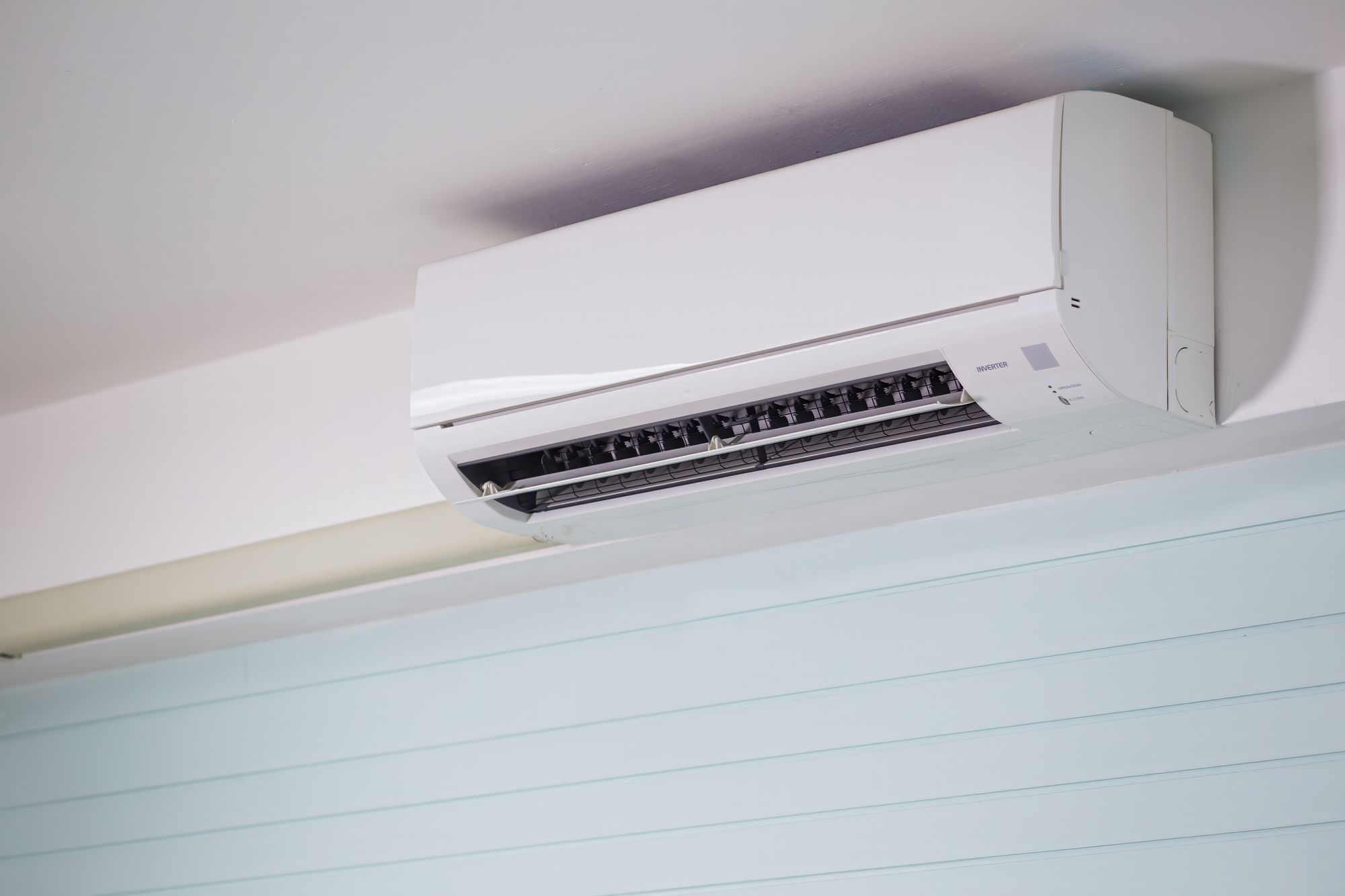
A ductless mini split system pairs one outdoor unit (compressor and outdoor coils) with one or more indoor air handlers mounted on the wall or ceiling. Small refrigerant lines and a condensate drain connect the two through a hole in the exterior wall, so no big metal ducts are needed.
These are the gold standard for heating a ductless room for good reason. Modern mini-splits achieve SEER ratings between 18 and 33, which means they move 2 to 3 times more heat per watt than a baseboard or space heater generates. They also handle ductless cooling in summer, dehumidify the air and use inverter technology to ramp output up or down instead of cycling on and off. Ductless systems operate at 19 to 32 decibels, so they're quieter than most conversations.
Installation overview: The indoor unit mounts high on a wall. Ductless systems require only a 3-inch hole for installation, through which the refrigerant lines, condensate drain and control wiring pass to the outdoor unit. The outdoor unit sits on a pad or wall bracket outside, positioned for good airflow. Installation of ductless systems is often completed in one to two days once electrical and routing are planned.
Electrical needs: Most ductless mini-splits need a dedicated 230V circuit. Your electrical panel needs enough capacity for a new breaker. In NC, the state still enforces the 2020 NEC-based NC Electrical Code. The 2023 NEC 210.8(F) is the national model requiring GFCI protection on all outdoor outlets at dwellings (50A or less, 150V to ground or less), including garages with floors at or below grade and accessory buildings. That 2023 rule isn't yet NC law, but replacing equipment on such an outlet can trigger the requirement under the current code.
Pros: Low operating cost. Ductless mini-splits can save $1,000 to $2,000 annually compared to resistance heat. Zoned control lets you heat only the room you're in. No duct losses (poorly sealed ducts lose 20–30% of conditioned air). Year-round heating and air conditioning in one system. Modern comfort without renovating walls.
Cons: Higher upfront cost than any plug-in or baseboard option. Refrigerant work requires a licensed HVAC technician, so you can't legally handle refrigerant yourself. The outdoor unit adds a visible box and some noise outside. Performance in extreme cold depends on the unit's low-ambient rating, though modern ductless mini-splits can maintain heating capacity at -13°F.
When a Mini-Split Is the Best Way to Heat a Ductless Room
Not every room is worth a $3,000+ install. Here's when the investment clearly pays off:
- Rooms that are also very hot in summer. Adding cooling and heating in one system is better than buying a mini split plus a window unit or portable AC. Portable ACs can cut effective cooling by up to 40% because they blow warm indoor air outside, which creates negative pressure that pulls hot outdoor air back in.
If outdoor temperatures in your area routinely drop below 20°F, choose a cold-climate model rated to hold capacity below freezing. For Wilmington, standard models work fine for most winter nights, but a cold-climate unit provides peace of mind for the occasional hard freeze.
Professional installation ensures proper sizing and efficiency. An HVAC pro runs a Manual J load calculation to determine the right capacity. Undersized units short-cycle and create humidity issues, while oversized units waste energy. NC building energy code (R403.7) requires correct sizing.
Cost ballpark: Single-zone 9,000–12,000 BTU units installed in NC typically run $2,200 to $7,500, depending on electrical panel work, line-set routing and permits. National ranges extend up to $12,000 for single-zone and $18,000 for multi-zone. A typical pro install takes one full working day, and you should add a second day if the panel needs an upgrade or the line route is complex.
Portable and Plug-In Electric Heaters
Most plug-in heaters draw 1,500 watts on a 120V circuit, which makes about 5,100 BTU. That's enough for a small room with good insulation of about 150 sq ft. In a bigger space or a drafty attic room with thin walls, a single portable heater won't keep up.
- Ceramic tower heaters use a fan to push warm air out quickly. They're good for fast warm-up but louder than other options.
- Oil-filled radiators heat slowly but hold warmth after you turn them off. They make no noise during operation, so they're better for heavy use over long nights.
- Infrared panel heaters send heat directly toward you and objects in the room rather than heating the air. Floor mounted units or wall-hung panels work well when you sit in one spot.
Electrical limits: A 1,500W heater draws about 12.5 amps on a 120V, 15-amp circuit. That leaves almost nothing for other devices on the same circuit, so running a space heater alongside a hair dryer or microwave on the same breaker will trip it. Check the breaker panel to find which outlets share a circuit before you plug in.
Pros: Lowest upfront cost ($30–$200), fully DIY, no permits, no permanent changes. They're perfect if you rent or for a guest room you heat twice a month. Heating a single room can save money compared to heating an entire house.
Cons: Highest per-BTU operating cost among all electric options. Limited heating capacity. Can trip shared circuits. Running one for 8 hours a day at $0.12/kWh costs about $1.44/day, or $43/month, while a mini split doing the same job in the same room costs about half that or less.
How to Use a Space Heater Safely
Space heaters are involved in 41% of fatal home heating fires despite making up only 3% of heating fire events. That stat is worth reading twice.
Here are steps to follow every time you use one:
- Choose a unit with UL or ETL listing, tip-over shutoff, and overheat protection. Skip no-name units without certification marks.
- Place on a flat, hard surface. Never on carpet, a bed or a towel.
- Keep 3 feet of clearance from curtains, furniture, beds and anything combustible.
- Never use an extension cord. Plug directly into a wall outlet. If the cord or cover plate feels warm, unplug it and use a different outlet.
- Don't leave running unattended or while you sleep. Oil-filled radiators are safer overnight than fan-forced models, but the safest practice is to turn off all portable heaters before bed. Using a heated throw blanket or hot-water bottle can give you extra warmth without raising heating costs.
Check your circuit: look at the breaker box and find which breaker runs the outlet you're using. Warm cover plates or lights that dim when the heater turns on are warning signs of a circuit that is overloaded. Add or test smoke alarms in any room with a portable heater, and if any combustion heaters exist in the house, install CO detectors on each level.
Wall-Mounted Electric Heaters and Baseboards
The difference between a $40 portable and a hardwired wall-mounted heater is that one is permanent. A baseboard or convection panel wired to a dedicated circuit delivers steady, quiet heat with no cords running across the floor or fire-hazard placement on the floor.
Main types:
- Electric baseboard heaters run along the base of a wall. They heat by convection. Silent. No fan. Warm air rises naturally.
- Wall-mounted convection panels sit flush against a wall, often higher up. Some include a small fan, but most are convection-only.
- Electric panel heaters come in flat, low-profile designs that look like a picture frame.
Installation basics: Most units need a dedicated 120V or 240V circuit. That means running cable from your breaker panel, installing a proper junction box, and wiring the unit per the manufacturer's specs. NC's State Electrical Code (based on 2020 NEC with amendments) governs wire gauge, breaker sizing and GFCI/AFCI requirements. Basements and garages at or below grade require GFCI protection on outlets under the 2023 NEC model, and while NC hasn't adopted the 2023 NEC yet, replacing equipment on such an outlet can trigger current-code requirements.
Pros: Silent or very quiet operation. Clean look. No combustion gases. Low maintenance, with no filters and no refrigerant levels to check. Good for bathrooms, small home offices and rooms where you don't want the look or noise of an indoor unit with a fan.
Cons: Operating cost is 3 to 4 times higher per BTU than a heat pump, because resistance heat converts electricity to heat at a 1:1 ratio while heat pumps move heat at 2:1 or 3:1 efficiency. Not practical for large or poorly insulated rooms where the electric bill would climb fast. Needs basic electrical skills or an electrician.
DIY or Hire an Electrician for Wall Heaters
You can mount a heater, cut an opening and run cable through an accessible attic or crawl space if you're handy. But there are real code and safety lines.
Usually needs a licensed electrician:
- Making sure you have the right breaker size and wire ampacity
- GFCI/AFCI protection where code requires it
Gas and Propane Heaters Without Ducts
Combustion heaters burn fuel inside your house. That sentence alone should make you cautious. Carbon monoxide, moisture buildup and fire risk all come with the territory, so I lean conservative here.
I recommend vented units only for most homeowners. NC's weatherization standards allow unvented fuel-fired space heaters only if they're under 40,000 BTU/hr for supplemental use, and bedroom use is capped at 10,000 BTU. Bathrooms are limited to 6,000 BTU. Oxygen depletion sensors are required.
Code and safety requirements: Gas heaters require permits, gas line sizing by a licensed plumber or gas fitter, combustion air calculations, proper clearances from combustibles and inspections. NC General Statute 160D-1110 requires permits for installing or altering heating equipment. CO detectors are mandatory on every level of a home with any combustion appliance.
Cons: Complex installation requiring a licensed pro. Safety risks if installed or maintained incorrectly. Insurance companies may raise rates or require vented appliances. Moisture from combustion can cause condensation and mold in tight spaces.
When Not to Use a Combustion Heater
There are situations where you shouldn't risk a fuel-burning heater:
- Small, sealed bedrooms. Code limits exist for a reason. An unvented heater in a 10x10 bedroom with closed doors and windows can use up oxygen and build CO to dangerous levels.
Check with your local building department or a licensed HVAC pro before installing any gas or propane heater. Other options exist that don't carry the same risk.
Radiant Floor and Underfloor Heating
Electric vs. hydronic: Electric radiant mats or loose cables are the practical choice for retrofits. You unroll the mat, embed it in thinset or self-leveling compound, and lay flooring over it. Hydronic systems (hot water tubing connected to a boiler) are more efficient for large areas but need plumbing infrastructure that puts them out of reach for most DIY installs.
Cost: Electric radiant floors run about $12 to $34 per square foot installed, including flooring, thermostat and prep. The heating system alone (not including flooring material) usually costs $4 to $12 per square foot. What does a 100-square-foot bathroom cost? It runs $1,200 to $3,400 total.
Install basics: Plan the mat layout to avoid vanities and toilets. Embed mats in thinset. Install a dedicated thermostat (it usually needs its own circuit). If you're working over a concrete slab, add insulation underneath to keep heat from spreading downward.
Sealing, Insulation and Draft Control
Localized heating relies on trapping warmth and blocking cold drafts. Start by finding where heat gets out:
Weekend Projects to Help Ductless Heaters Work Better
Small changes add up. In a mild-winter climate like Wilmington's, good air sealing combined with enough attic insulation may let you step down from a 12,000 BTU mini split to a 9,000 BTU model, saving several hundred dollars on the unit. Dressing in thermal layers also helps warm your body directly while your heater heats up.
Choosing the Right Heating Option for Your Room
Here's the decision guide, cut short:
- Occasional heat for a small guest room or home office → Plug-in electric heater with proper safety precautions and circuit awareness. Portable electric heaters are often the simplest option for individual spaces used only a few hours a week.
- Heating a detached garage or workshop with gas already available → Vented gas heater installed by a licensed pro.
Call an HVAC pro or electrician for a quick assessment if your service panel is already full, if gas piping is involved, or if you're unsure about circuit capacity. A 30-minute consultation can save you from a system that is too small or a code violation.
Note on incentives: NC's Energy Saver NC program offers rebates up to $8,000 for ENERGY STAR-certified electric heat pumps that replace a primary heating system. Supplemental units for a bonus room don't qualify. The federal tax credit under Section 25C ended December 31, 2025, so no federal tax credit applies to mini-splits installed in 2026.
Frequently Asked Questions About Heating Rooms With No Ductwork
Is a Ductless Mini-Split Overkill for One Room?
For a daily-use room (office, in-law suite, bonus room), a single-zone mini split often makes financial sense within 5 to 10 years versus running electric space heaters. A 12,000 BTU ductless mini split in NC costs about $450/year to operate, while two 1,500W space heaters running the same hours cost about double that.
Do You Need a Permit to Add a Heater Without Ducts?
Electrical work (new circuits, panel changes) and any gas piping almost always require permits and inspections. NC General Statute 160D-1110 requires permits for installing or altering heating equipment. Even in DIY-friendly areas of North Carolina, panel work and gas installations are inspected.
Plugging in a portable space heater doesn't require a permit. Hardwiring a baseboard heater to a new circuit does. When in doubt, call your local building department. The call is free and takes five minutes.
Will a No-Duct Heater Hurt Your Home's Resale Value?
Professionally installed ductless mini splits and clean-looking electric wall heaters improve both your comfort and buyer appeal, especially in older homes or finished garages that previously had no heating. A permitted, code-compliant install with proper wiring is a selling point.
On the other hand, obvious DIY gas installs or unsafe-looking wiring get caught by home inspectors and worry buyers. If you're doing permanent work, keep it clean, pull the permits and make sure the complete installation meets code. That approach protects both your safety and your home's value at resale.