Best Ways to Heat a Basement (DIY Homeowner's Guide)
I'm Ken, a DIY homeowner in Wilmington, NC, and I've spent more time than I'd like to admit figuring out basement heating. Basements can be 5–15°F cooler than the main living area, and heating one properly means dealing with cold concrete floors, damp basement walls, and usually no existing ductwork. Here's my breakdown of the best basement heating options based on what actually works for real homeowners.
How I picked the best ways to heat a basement
My evaluation criteria:
- Comfort level: How evenly it heats a typical basement of 600–1,000 sq. ft., especially down at floor level.
- Upfront cost: What you'll spend in 2026 dollars, doing it yourself vs. having a pro install it.
- Operating cost & efficiency: What you'll pay month to month. Some are cheap to run, others are energy hogs.
- DIY-friendliness: Which jobs a competent homeowner can handle and which need a licensed pro.
- Space impact: How much floor space, wall space or ceiling height the system might take up.
- Safety & code issues: Venting needs, electrical load, combustion concerns, permits.
- Climate & home setup: Whether you already have central HVAC, gas service or an unfinished basement can change everything.
Basements lose heat through foundation walls, windows and air leaks. To effectively heat a basement, proper insulation and sealing air leaks are essential. Insulating walls with R-13 to R-15 reduces heat loss, and a minimum of R-30 insulation is recommended for ceilings between the basement and upper floors. Sealing air leaks-especially at rim joists-can significantly improve heating efficiency, because proper sealing prevents warm air from escaping through gaps. Closed-cell spray foam or rigid foam board against rim joists is the gold standard over fiberglass batts. Consider this moisture management and insulation work "step zero" before you spend a dime on any heating solution.
7 best ways to heat a basement
For most finished basements that get regular use, a ductless mini-split heat pump is the best overall pick. For new builds or gut remodels, hydronic radiant floor heating edges it out on pure comfort. The rest of the list is here to fill in the gaps:
- Electric radiant floor heating (mats/cables)
- Extending existing furnace or heat pump ductwork
- Electric baseboard or wall heaters
- Portable electric space heaters
- Gas stove or direct-vent fireplace
1. Ductless mini-split heat pump
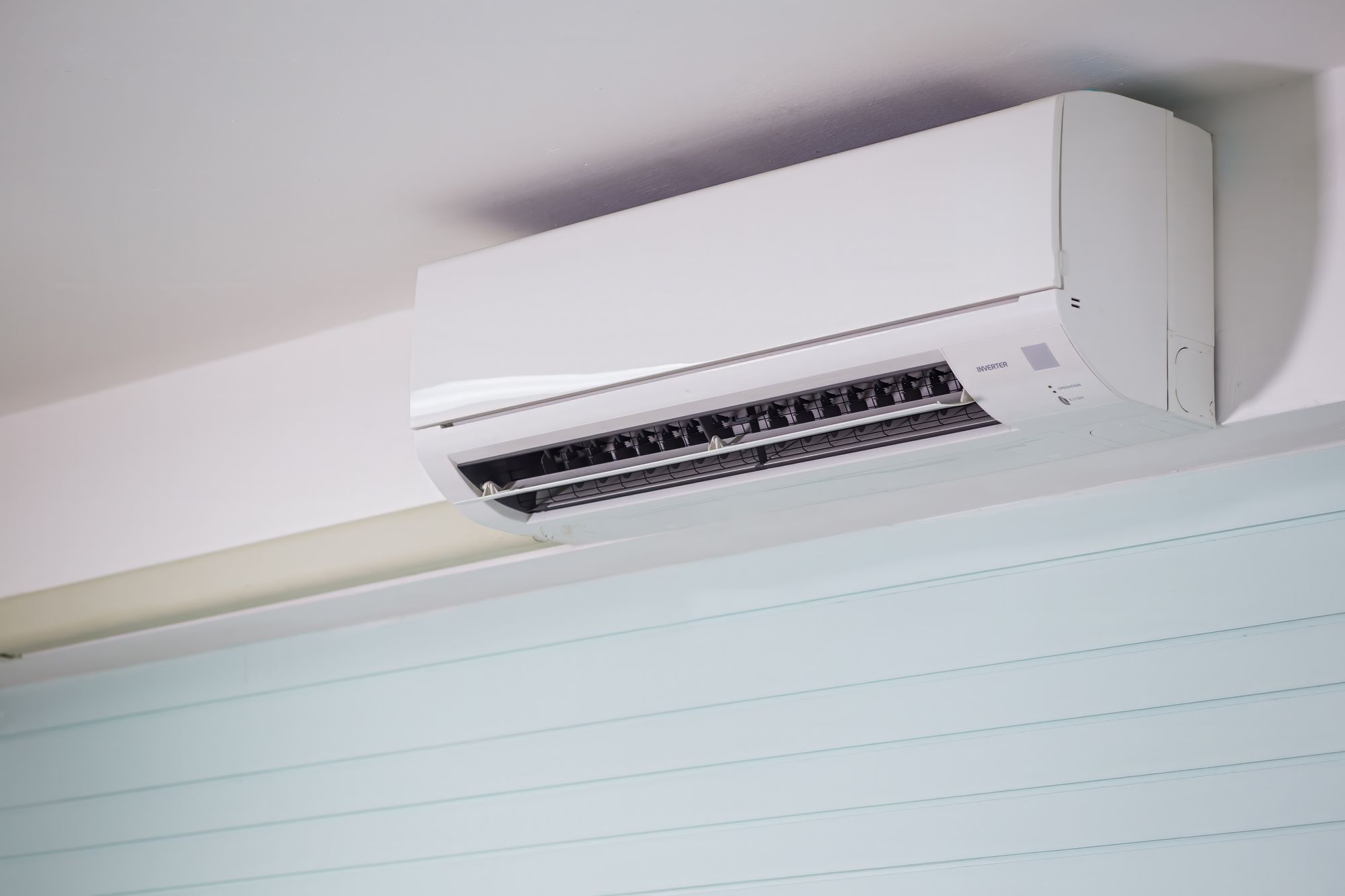
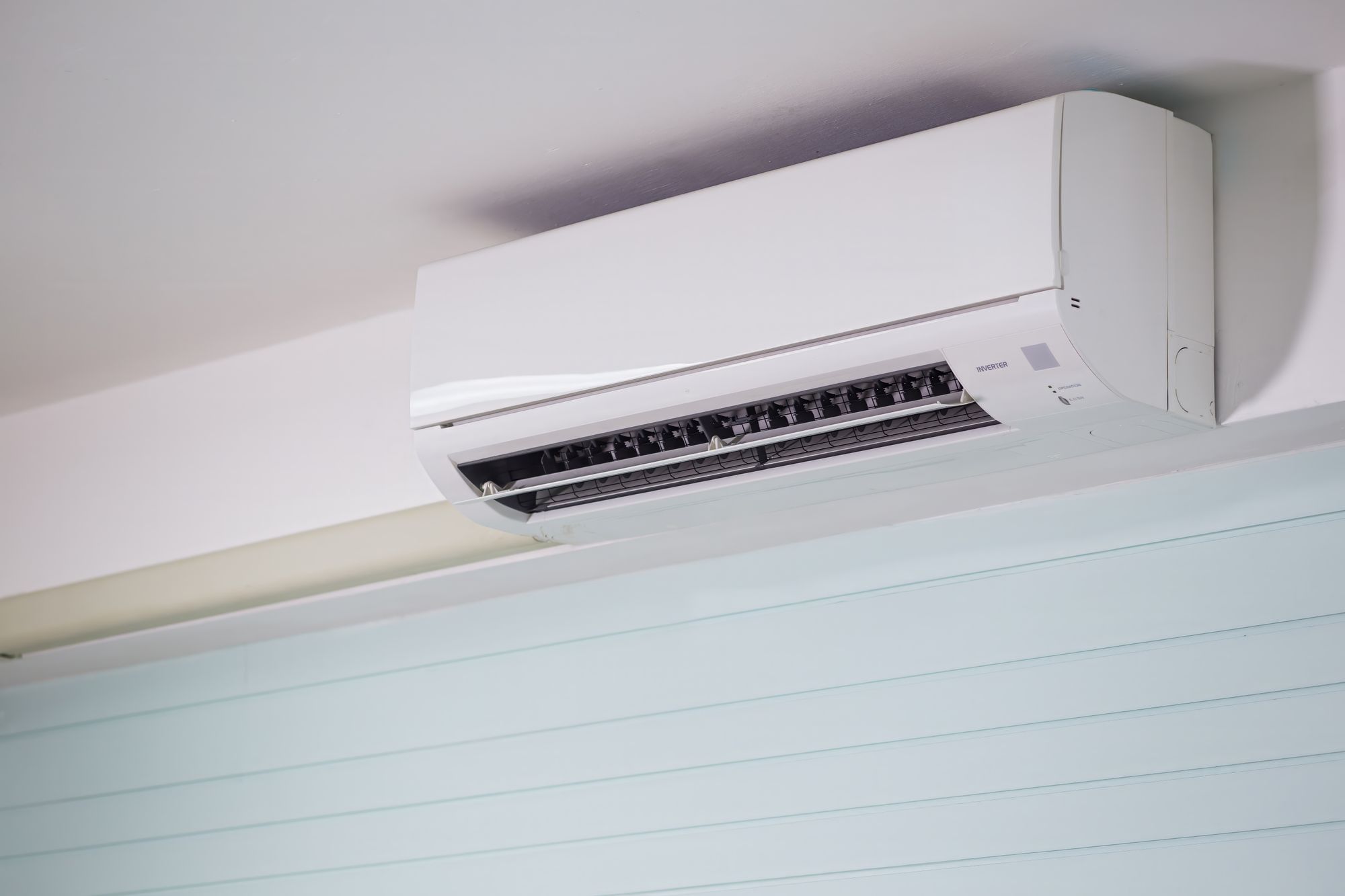
A ductless mini split has an outdoor compressor with one or more indoor heads, and you don't need any ductwork. For many homeowners in 2026, it is the best all-around basement heating system for both heating and cooling.
Why it stands out
Ductless mini-split heat pumps are highly energy efficient and give you zone control, so you can heat the basement separately from the rest of the house. Heat pumps can deliver more heat energy than the electrical energy they consume, and ductless heat pumps are up to three times more efficient than traditional HVAC. Modern cold-climate units work well down to about –13°F, which is far colder than most NC winters. Leftover R-410A systems can still be installed thanks to the EPA's May 2026 Technology Transitions rule, which removed the limit for pre-2025 equipment.
Best for
- Finished basements used daily: family rooms, home offices, in-law suites.
- Homes where extending ductwork would overload the existing system.
- Homeowners staying 5+ years who want lower energy bills over time.
Key strengths
- Gives you independent temperature control for the basement, so you get true zoning without having to re-duct.
- Ductless mini-split heat pumps have both heating and cooling, so you also get AC and dehumidification in summer.
- Little disruption to finished walls. Small line-set penetrations instead of big duct chases.
- A single-zone 18,000 BTU unit for a large basement usually runs $4,000–$7,000 installed. Monthly operating cost in heating season might be $30–$70 vs. $150–$300 for electric baseboard heaters covering the same space.
- The federal 25C Energy Efficient Home Improvement Credit (30%, up to $2,000 for heat pumps) has covered property placed in service through December 31, 2025. If you are planning now, it's a good idea to check current IRS rules. In North Carolina, Energy Saver NC (HEAR/HOMES rebates, started January 2025) pays up to $8,000 for an ENERGY STAR heat pump and $1,600 for insulation, ventilation and air sealing, enough to seriously change the math.
Possible limitations
- Higher upfront cost and usually not a DIY job - refrigerant handling, electrical and permits require pros.
- The indoor head is visible on the wall, which can bother you aesthetically.
- Needs a good outdoor unit location and a plan for condensate drainage in winter.
2. Hydronic radiant floor heating
Hydronic radiant floor heating runs hot water through PEX tubing that is embedded in or under the concrete slab, and it is powered by a boiler. It delivers the warm-floor comfort that makes cold basements feel like real living space.
Why it stands out
Radiant floor heating provides even warmth without circulating dust and without blowing air around, so there are no cold spots and no drafts. It uses infrared radiation for warmth, heating objects and people directly. It is often the most comfortable option for a basement that you're fully finishing or gutting.
Best for
- Major basement renovation or new construction where the slab is accessible.
- Primary living spaces: rec rooms, basement apartments, home theaters where quiet matters.
- Homes that already have a boiler producing hot water.
Key strengths
- Provides even warmth without air circulation, so there is no forced-air noise and no dust.
- Invisible equipment: no ducts, registers or wall heaters eating up space or ceiling height.
- Lower operating costs than electric systems when paired with an efficient boiler (90–95% AFUE). Hydronic systems usually cost $10–$25 per square foot installed.
- Ideal for finished basements with tile, stone or LVP flooring.
Possible limitations
- High upfront cost. Professional installation is standard. Very hard to retrofit into a floor that's already finished.
- Circulates warm water through tubing under floors, so you need excellent insulation beneath the slab or you're heating soil, not the room.
- Slow response time, so it's better for maintaining a steady temperature than for quick on/off use.
3. Electric radiant floor heating
Electric radiant floor heating uses resistance cables or thin mats under flooring materials like tile or rated LVP. It's a simpler, more DIY-friendly radiant option than hydronic for smaller areas.
Why it stands out
This is often the simplest radiant heating system for you if you are re-tiling a basement bathroom or office. Electric radiant systems have no bulky equipment or maintenance after installation, just the mat, a thermostat and a dedicated circuit.
Best for
- Smaller to medium zones: bathrooms, offices, exercise areas where warm floors matter.
- Basements where you're already replacing flooring and can add mats during the job.
- If you are a DIYer comfortable with layout, you can hire an electrician for the circuit and thermostat connection.
Key strengths
- Easier retrofit than hydronic. Thin mats go over concrete with appropriate underlayment.
- Electric radiant heating systems have no maintenance after installation.
- Very comfortable, even radiant heating in "bare feet" areas. Materials for a zone of 100 sq. ft. run about $700–$2,000.
Possible limitations
- Higher operating cost per square foot than a heat pump because it's straight electric resistance (COP of 1.0).
- Not ideal as the sole heat for a large basement unless your electricity bill is already low and the slab is well insulated.
- Needs careful planning around floor build-up height and transitions between flooring types.
4. Extending your furnace or heat pump ductwork
If your home's central heating system has spare capacity, adding supply and return ducts to the basement can be one of the cheaper paths to full-time heated air downstairs.
Why it stands out
This approach can keep costs down because the equipment already exists. Adding vents and a return path lets warm air reach the basement by using your existing system. Comfort depends a lot on duct sizing, balancing and sometimes a zoning damper system.
Best for
- Homes with a properly sized furnace or heat pump with capacity to spare.
- Unfinished basement ceilings where duct routing is simple, and no ductwork is needed through finished walls.
- If you prefer a single-system approach and don't need separate basement cooling.
Key strengths
- It's often cheaper than installing a separate system. Adding 2–3 supply registers might cost $500–$1,500.
- Equipment is out of sight, just registers in the ceiling or walls.
- Can be paired with a smart thermostat or zoning system to manage air circulation and prevent overheating upstairs.
Possible limitations
- If the existing system is undersized, pulling heated air to the basement creates cold spots upstairs.
- Basements often end up under-supplied without careful design. Cool air settles, so returns at floor level matter.
- Static pressure and load calculations mean this usually isn't a pure DIY project. Call an HVAC pro.
5. Electric baseboard or wall heaters
Electric baseboard heaters and electric wall heaters are fixed resistance heaters, mechanically simple, cheap to install and easy to zone by room.
Why they stand out
Baseboard heaters use convection to heat air in a room, drawing in cold air at the bottom and releasing warm air from the top. Wall heaters save floor space by being installed in walls. Both types are helpful where running ducts or refrigerant lines would be hard to do.
Best for
- Small to medium finished rooms (guest room, office, craft room) not heated 24/7.
- Mild-winter regions or homes where electricity rates are reasonable.
- Owners who want permanent, code-compliant heat without the cost of a mini split or radiant floor heating systems.
Key strengths
- Low upfront cost: about $300–$1,200 per unit installed.
- Easy zoning, and each unit has its own thermostat for room-by-room control.
- Little maintenance. No combustion or refrigerants.
Possible limitations
- Highest operating cost per BTU in most areas, straight resistance heat.
- Do units take up wall space and do surfaces get warm to the point of being uncomfortable? Furniture placement gets limited.
- Multiple units need proper circuit planning to avoid overloading your panel.
6. Portable electric space heaters
Portable electric heaters are the plug-in ceramic, infrared or oil-filled units from any hardware store. They are not a long-term basement heating plan, but they're often what you reach for first.
Why they stand out
Portable electric heaters are affordable and easy to set up, often under $50–$100, with zero installation. They're useful for testing how much heat a space actually needs before you commit to a permanent upgrade.
Best for
- Occasional-use basements: workshop days, holiday overflow, short gym sessions.
- Renters or you as a homeowner who can't modify wiring or HVAC.
- Spot heating in small spaces or testing comfort before a bigger investment.
Key strengths
- Very low buy price. Portable heaters can be moved to the exact area in use.
- No permitting or professional work required.
Possible limitations
- High operating costs over time. Portable heaters are not energy efficient for long-term use or for keeping an entire room at temperature.
- Provide local heating but are inefficient for heating large spaces.
- Can pose a fire risk if not monitored. It is a good idea to look for safety features like automatic shut-off. Safety risks increase when multiple units share one circuit.
7. Gas stove or fireplace (vented)
A gas direct-vent stove or fireplace draws combustion air from outside and vents outdoors, which is completely different from a decorative electric fireplace that just glows. These are real space heaters designed to warm a room.
Why it stands out
Strong heat output and cozy ambiance can turn a cold, cave-like basement into a real den. In areas with cheap natural gas, operating costs stay reasonable. Some models work during power outages if they have a standing pilot or battery ignition, though models vary, so it's a good idea to check before you buy.
Best for
- Basements used as a family room or den where the fireplace feel matters.
- Homes with existing gas service and a clear vent route to the exterior.
- Owners willing to hire a pro for gas piping, venting and code compliance.
Key strengths
- High BTU output and fast heating. You can expect $3,000–$7,000 installed depending on venting complexity.
- Acts as a design focal point that adds value to a finished basement.
- Can keep the space warm during some power outages.
Possible limitations
- Must be properly vented. Unvented units can add more moisture and carbon monoxide risk.
- Needs gas line installation, annual maintenance and proper ventilation, and all of these are pro-only tasks.
- Heat is local unless paired with fans or an open floor plan for better air circulation.
Quick comparison of the best basement heating options
- Ductless mini-split heat pump. Best for year-round comfort in a finished basement with daily use.
- Hydronic radiant floor. Best for new builds or gut remodels focusing on comfort and low operating cost.
- Electric radiant floor. Best for smaller remodel zones where you're re-tiling and want warm floors.
- Extended central HVAC ductwork. Best when your existing system has spare capacity and ceilings are open.
- Electric baseboards / wall heaters. Best for simple, permanent heat in individual rooms.
- Portable space heaters. Best for short-term, low-budget spot heating only.
- Gas stove / fireplace. Best for high-output heat plus ambiance in a basement den.
How to choose the right way to heat your basement
Choose based on how you use the basement
A storage-only or unfinished basement doesn't need the same heating system as a full living space or Airbnb. For daily use, you might want to go with a mini split, radiant floor or ductwork extension. For occasional hobby use, electric wall heaters or baseboard heaters may be enough. If you just need to protect pipes from freezing, a small duct extension or a carefully placed space heater with a thermostat will do the job at ground level.
Choose based on budget and incentives
- Low upfront / higher operating cost: portable electric heaters, electric baseboard heaters, basic wall heaters.
- Higher upfront / lower operating cost: mini-splits, hydronic radiant, well-planned duct extensions.
The federal 25C Energy Efficient Home Improvement Credit (30%, up to $1,200/year or $2,000 for heat pumps) has applied to eligible equipment placed in service from 2023 through December 31, 2025. If you're planning projects after that window, it's a good idea to check current IRS rules. In North Carolina, Energy Saver NC can cover up to $8,000 for an ENERGY STAR heat pump and $1,600 for insulation, enough to tilt the cost comparison strongly toward a mini-split plus insulation upgrade, cutting your electricity bill dramatically.
Choose based on finished vs unfinished basement
An unfinished basement is easy to work in. You can run ducts, lay PEX, frame around a gas stove, or insulate basement walls with rigid foam board before closing everything up. Finished basements favor low-impact solutions like mini-splits, electric radiant under new flooring, or wall heaters. Either way, insulate rim joists and foundation walls with closed-cell foam or rigid board before throwing more BTUs at the problem. Cutting energy loss at the envelope is cheaper than sizing up your heater. Addressing cold air infiltration is going to reduce how hard any system works to keep the space warm.
Which heater is best for your basement?
There's no single winner for every basement, but the front-runners are clear:
- Choose a ductless mini split for the best mix of efficient heating, cooling and year-round comfort in finished basements you use every day.
- Choose hydronic radiant floor heating for a full build or slab-up remodel where maximum comfort matters and square footage makes the investment worth it.
- Choose electric radiant mats if you're re-tiling a bathroom or smaller area and want warm floors plus supplemental heat.
- Choose extending ductwork if your current furnace or heat pump has capacity and your ceiling is still open.
- Choose baseboard heaters or wall heaters for simple, code-compliant heat in a couple of rooms.
- Choose portable space heaters only as a temporary or spot heating solution, not your long-term plan.
- Consider a gas stove or fireplace if atmosphere matters and you have safe venting options.
Final thoughts
The best way to heat a basement almost always involves two moves. First, tighten the envelope (insulation, air-sealing at rim joists and basement walls), then pick the right heat source. Skipping step zero means you're paying to heat the soil and the outdoors.
I'd encourage you to tackle the DIY-appropriate parts. That means air-sealing, rigid foam insulation and planning your layout. But call licensed pros for gas work, boiler installation, refrigerant handling or major electrical changes. That's one place where saving money by doing it yourself can cost you a lot more if something goes wrong.