How to Heat a Sunroom in Winter (Without Wasting Money)
How to heat a sunroom in winter without wasting money is something I kind of figured out after my sunroom in Wilmington, NC went from being my favorite room to a glass bowl nobody really wanted to sit in. Once winter hits, the space might get too cold to really use. If you have something like this, here is what might actually work to heat it without sending your electric bill through the roof.
Key Takeaways
Most sunrooms don't have enough insulation, and with all that glass they lose heat fast. You might want to slow that loss first, then add the right kind of warmth for how you actually use the room.
If you want true year-round comfort, a ductless mini-split heat pump is usually the best long-term investment, especially in mild-winter climates like North Carolina where rebates can take thousands off the upfront cost. Before you buy any heater though, you might want to spend a weekend on the quick wins: seal drafts, hang thermal curtains, flip your ceiling fan to low in the winter direction, and put thick rugs on cold floors. And always respect the safety basics - space heaters need space from cloth, dedicated circuits when you can get them, and GFCI protection in damp or semi-outdoor sunrooms.
Why Sunrooms Feel Like Freezers in Winter
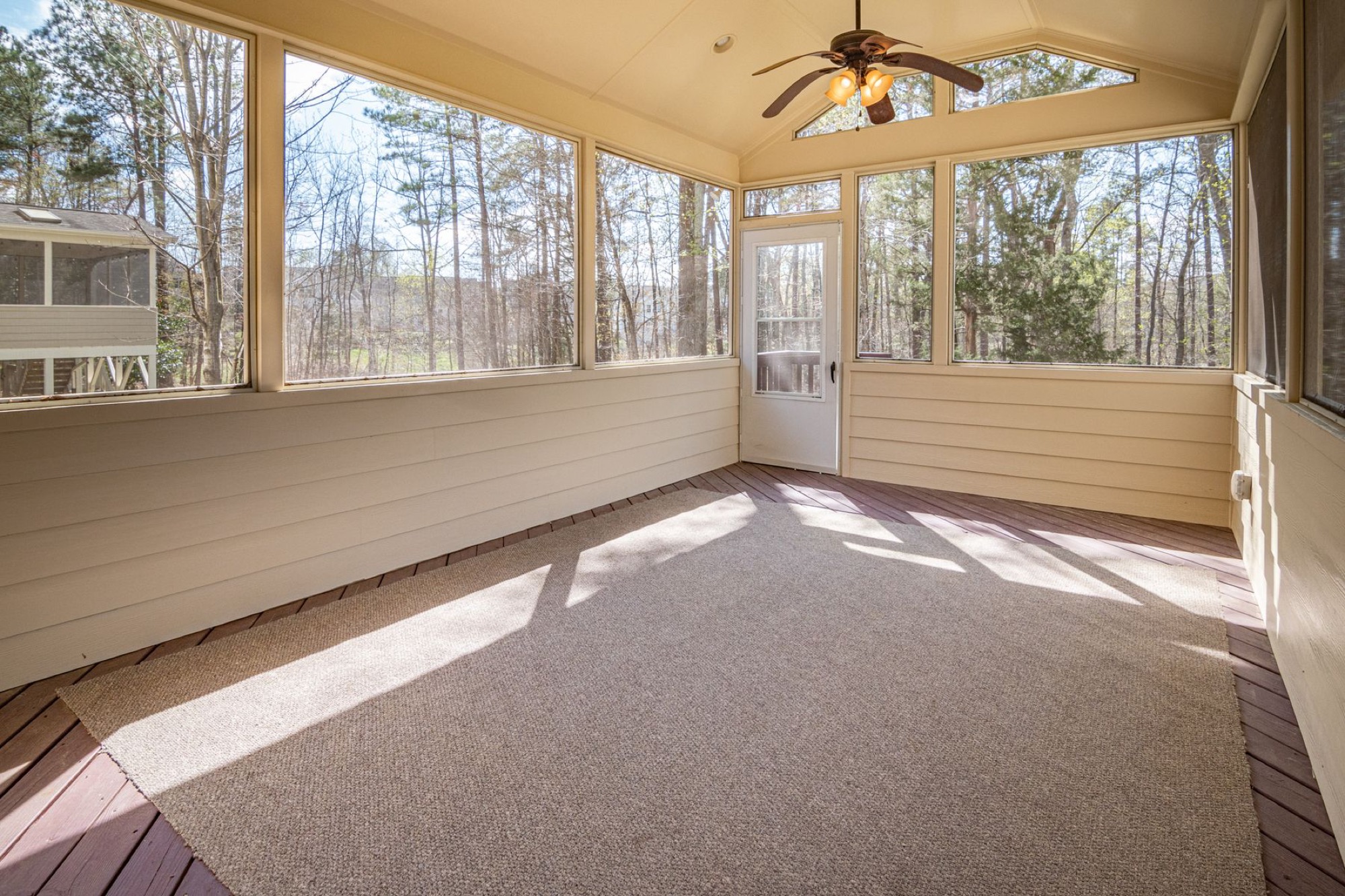
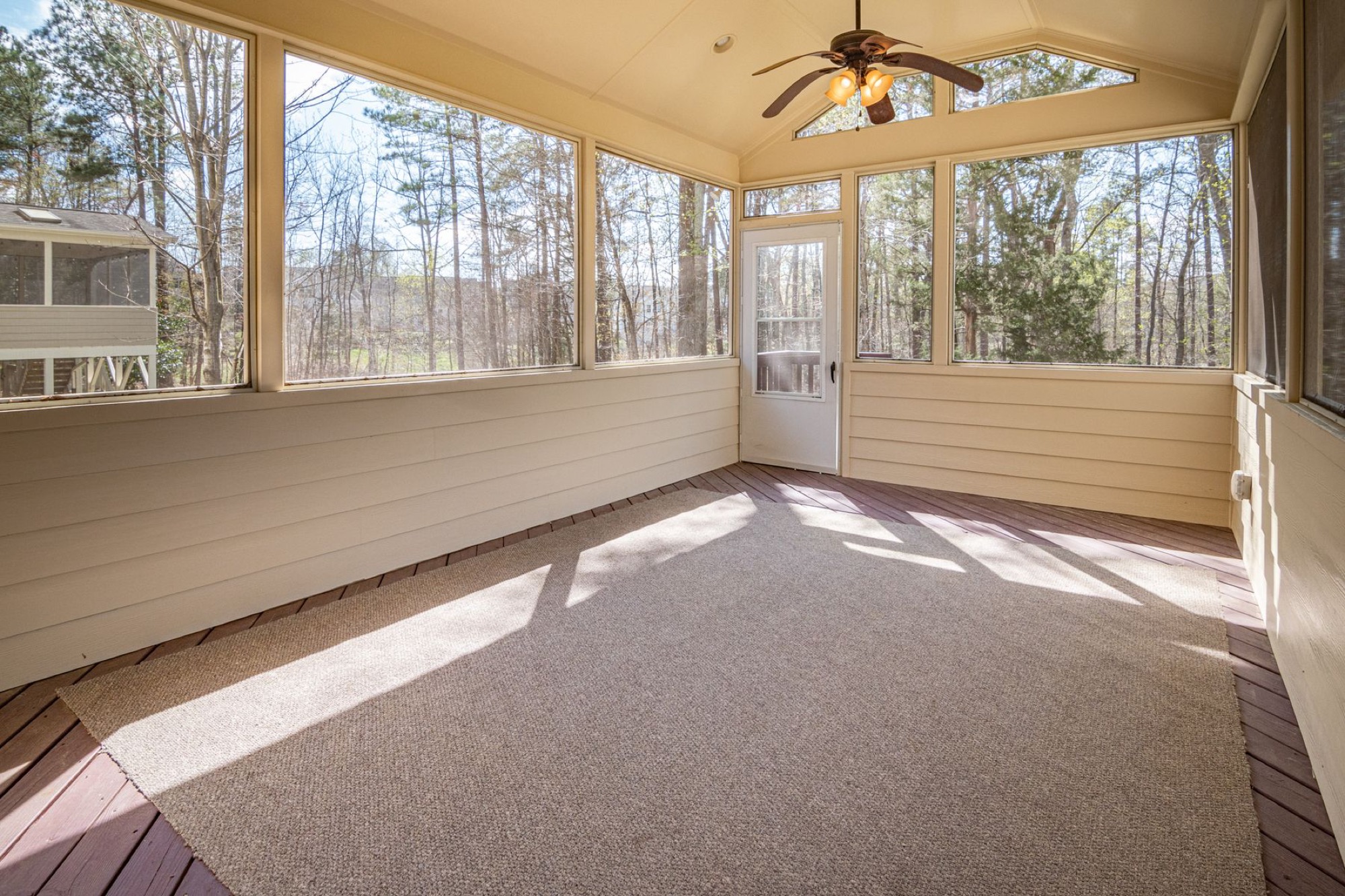
On a 35°F night last winter, I walked into my sunroom with a coffee and a blanket and my thermometer read 52°F. Three glass walls, an aluminum-framed slider, an uninsulated floor over a wood deck - the room was doing its best impression of an open porch.
Here's why: a 3-season sunroom uses single-layer or thin panel walls and has no thermal breaks in the framing. Sunrooms usually have a lot of glass compared to wall space, and that glass lets heat out fast, and 3-season rooms lose heat fast when temperatures drop below about 40°F. Single-pane glass can have a U-factor around 1.0, which is 10–20 times worse than an insulated wall. Compare that to a four season room, which uses insulated walls and frames that break the flow of heat, connects to your home's HVAC system, and has low-E double glazing that meets NC's code requirement of U ≤ 0.32. A 4-season sunroom stays comfortable in winter without needing extra heat. A 3-season room has to use add-on solutions for winter use.
Even when the sun is out, the low winter angle and short days mean the room cools fast after the sun goes down - you can't rely on passive solar alone. So the game plan is two-fold: slow down heat loss as much as practical, then pick a heating strategy that matches whether you're out there for occasional evening reading or working from the sunroom every day.
Seal Drafts and Add Low-Cost Insulation First
Every watt of heat you pump into a leaky room is money that goes right out the door. You'll need to insulate and seal drafts in rooms before you spend a dime on heaters.
Air sealing basics:
- Adding weatherstripping and caulk can help block cold drafts around sliding doors and window frames
- Press foam seals behind outlet covers on outside walls
- Run silicone caulk along sill plates and where the sunroom meets the main house
- Sealing joints prevents heat from escaping the sunroom - even small gaps add up fast
Windows: Plastic shrink-film kits or clear acrylic interior storm panels create an air gap over single-pane glass. They're cheap, you can take them down in spring, and they can cut heat loss from air movement and radiation in a real way. Thermal window treatments can block cold drafts at night while letting in solar heat during the day - hang insulated, thermal-lined curtains or cell shades and close them at dusk. Heavy curtains on sliding doors work in a similar way.
Floors: If your sunroom sits over a crawl space or deck, the floor feels like an ice rink. Rigid foam between joists helps where you can reach it. Electric floor heating is recommended for cold floors if you want a complete solution - underfloor radiant heating creates comfortable ambient heat from the ground up. At minimum, if you cover cold floors with rugs plus foam underlayment, that makes a real difference.
Use Air and Sun to Your Advantage
Open south- and west-facing shades fully on sunny winter days to let the sun pour in. Applying thermal mass materials - like a stone-tile floor or a heavy ceramic table - can absorb and release solar heat, so it keeps warmth in the room longer after the sun goes down. In summer, interior shades block solar heat before it enters the room and cut bright light, but in winter you want every bit of sun you can get. How do you keep that heat? Close shades at dusk to trap what you've gained.
Ceiling fans can push rising warm air back down when you run them in reverse (low in the winter direction). This gently moves the warm air that's gathered at the ceiling back to seating level without creating a cool draft on your body. You can improve air circulation by using ceiling fans and small moving fans - pair a small fan with a portable heater to distribute warmth more evenly in long, narrow rooms. Make sure any ceiling fan is rated for damp locations if your space sees humidity changes.
Best Space Heaters for Occasional Use
Portable space heaters can warm small spaces quickly. Electric space heaters provide quick and targeted warmth for small spaces - a typical 1,500 W ceramic or oil-filled unit draws about 12.5 amps on a 120 V circuit and costs about $0.22 per hour to run at NC's average 15¢/kWh rate. That's about $50–55 a month if you ran it eight hours a day, but with a thermostat cycling on and off, the real cost is lower.
Safety musts:
- Tip-over shutoff and overheat protection
- No extension cords for high-wattage units
- Check your circuit's amp rating before you plug in
- Keep space from curtains and furnishings
Convection heaters struggle in uninsulated 3-season rooms because they're trying to heat all the air, which leaks out fast. They're best for short periods in a small, tighter space. For occasional use on days when temperatures drop below about 45°F, a portable heater near your sitting area is a perfectly fine kind of solution. In a long cold snap though, you'll find an installed system more comfortable and cheaper to run.
Why Infrared Heaters Shine in Sunrooms
An infrared heater works differently from a convection unit - it warms people and objects directly, similar to feeling the sun on your skin, instead of heating all the air first. According to ASHRAE's handbooks, radiant systems let you maintain comfort at a lower air temperature because your body's mean radiant temperature stays higher.
That's why infrared heaters are ideal for drafty rooms. Even when cold air leaks through every gap, the radiant warmth still makes you feel comfortable while you're sitting on the sofa or reading at a table.
Common formats:
- Plug-in infrared heater towers near a seating area
- Wall-mounted infrared heater bars are above a sofa
- Ceiling-mounted panels that point at your main sitting zone
Placement matters - angle them toward where you actually sit rather than pointing into empty space. Maintain space from cloth and blinds, mount at the manufacturer's recommended height, and use GFCI-protected circuits if the sunroom is a damp location.
If your winter sunroom feels like sitting in a cold fishbowl - all that glass sending cold toward you - an infrared heater directly offsets that radiant cold. It's the single biggest difference you may notice.
Mini-Splits and Other Heating Options
If you work from the sunroom, use it as a playroom, or just want to enjoy the view in every season, it's time to invest in something permanent. This is where a ductless mini-split heat pump pays for itself.
Mini-split systems have both heating and cooling without ductwork - a wall-mounted indoor unit, a small outdoor unit, an independent thermostat so you control that room alone. They dehumidify in the shoulder months, run quietly and modern cold-climate models maintain good efficiency down to around 0°F. Electric baseboard heaters are inexpensive to buy and easy to install as another route, but they cost more to operate long-term than a heat pump.
In North Carolina, Energy Saver NC (HEAR/HOMES rebates started January 2025) can pay up to $8,000 for an ENERGY STAR heat pump for eligible households. But as of September 1, 2026, those rebates are for electric-to-electric upgrades only, and heat pump projects may need insulation and air sealing done alongside.
Don't try connecting the sunroom into your existing central HVAC - small main systems, code issues with ducting into unconditioned spaces. The sunroom taking conditioned air from the rest of your home create more problems than they solve. A mini-split plus basic insulation can turn a former 3-season room into almost a complete four season room.
Mini-split sizing, refrigerant lines and electrical work are pro jobs. Consult a licensed HVAC contractor and figure out local code requirements - NC still uses the 2020 NEC-based code, so the national 2023 GFCI changes aren't fully in force here as of 2026.
Safety, Power and Calling a Pro
Adding heat to a glass-heavy, semi-outdoor space is not the time to cut corners on electrical or fire safety.
A typical 1,500 W heater pulls ~12.5 amps on a 120 V circuit. If you're running that plus lamps and a fan on the same 15-amp branch, you risk tripping breakers or worse. Install GFCI receptacles for outlets in rooms that get blown rain or condensation. While the 2023 NEC narrowed some exceptions for HVAC equipment, North Carolina still follows a 2020-based code as of 2026 - check with your local inspector.
Call a pro when you see:
- Warm or discolored outlets
- Frequent breaker trips
- You need new dedicated circuits
- Any hard-wired infrared heater or mini-split install is a pro job
- Structural insulation upgrades (roof, windows, converting to true four-season specs)
These jobs involve load calculations, permits and warranty considerations that go beyond a great weekend DIY project.
FAQ on Heating a Sunroom in Winter
Can I leave a space heater on overnight in my sunroom?
Most manufacturers advise against leaving a heater on overnight without someone watching, especially in rooms with curtains, wood trim and soft furniture. A better approach is to pre-heat the room in the evening, then turn the heater off before bed. Rely on insulation, rugs and heavy closed curtains to hold warmth through the night. If you need true overnight heat, a permanently installed, thermostat-controlled system like a mini-split is the safer way to go.
Will a ceiling fan make a winter sunroom feel colder?
Not if you set it right. On low speed, in the winter direction, the fan pushes warm air gathered at the ceiling back down without creating a wind-chill effect on your body. If it feels drafty, the speed is too high. You can experiment while sitting in your usual chair until the fan feels invisible but the room temperatures feel more even from floor to ceiling.
Is upgrading a 3-season sunroom worth it?
A full upgrade means insulated walls, a better roof, upgraded windows and a dedicated heating-cooling system - a significant project and cost. It's usually worth it if you'll use the space daily as an office, family room or guest space, and if resale value matters. For more casual, occasional use, start with low-cost steps - draft sealing, an infrared heater, rugs, a ceiling fan - and live with those for a winter before you commit to a rebuild.
Can infrared heat replace central heat in a sunroom?
Infrared heaters can keep you comfortable for hours in a cool room, but they don't make the whole space evenly warm wall-to-wall. They're a great primary solution for "sit and read for an hour" or "morning coffee" situations. If kids are playing all over the room or you want a consistent 68–70°F, combining small room improvements with a mini-split is more realistic.
Will a mini-split still work after refrigerant rules change?
Systems sold today are designed around current regulations. The EPA's May 2026 Technology Transitions reconsideration rule removed the installation deadline for residential AC and heat pump systems whose components were all made in or brought into the U.S. before January 1, 2025 - meaning leftover R-410A equipment can still be installed. Talk with your HVAC pro about refrigerant type, long-term serviceability and parts availability before choosing a model.